
Many marketers today find themselves at a crossroads, navigating the complexities of reaching their audience amidst an ever-evolving digital landscape. Understanding the power of AI can transform your email marketing strategy, optimizing your campaigns to resonate with your target market. In this post, you will discover how data-driven insights can enhance your email marketing efforts, leading to increased engagement, higher conversion rates, and ultimately, sustained growth for your business. Join us as we explore the innovative ways AI can reshape your approach with AI Insights for Email Marketing.
Key Takeaways:
- Data-Driven Decisions: Leverage analytics to inform every aspect of your email campaigns, from content to timing.
- Personalization: Use AI to create tailored experiences for recipients, increasing engagement and conversion rates.
- Segmentation: Utilize advanced segmentation techniques powered by AI to target specific groups based on behavior and preferences.
- Automation: Implement AI-driven automation for optimized delivery times and follow-ups, enhancing efficiency.
- A/B Testing: Employ AI technologies to execute and analyze A/B tests systematically, refining your strategies continuously.
The Power of Data in Email Marketing
While many marketing strategies come and go, one element remains timeless: the importance of data. In email marketing specifically, the power of data amplifies your ability to connect authentically with your audience. Every email you send has the potential to yield valuable insights, from engagement rates to conversion statistics. You can seamlessly tailor your campaigns based on real-time data, ensuring your messages resonate with your audience’s preferences and behaviors. This is where data-driven campaigns set themselves apart—they allow you to make informed decisions that can lead to increased growth and bottom-line success.
Why Data-Driven Campaigns Matter
Any marketer worth their salt knows that intuition alone is not enough to drive results. Data-driven campaigns harness the power of analytics to optimize not only the content of your emails but also the timing, segmentation, and frequency of your outreach. When you embrace a data-centric approach, you begin to understand your audience on a deeper level, allowing you to create highly personalized experiences that foster loyalty and engagement. This leads to improved open rates, click-through rates, and, ultimately, conversions—elements that are imperative to thriving in today’s competitive landscape.
The Rise of AI in Marketing
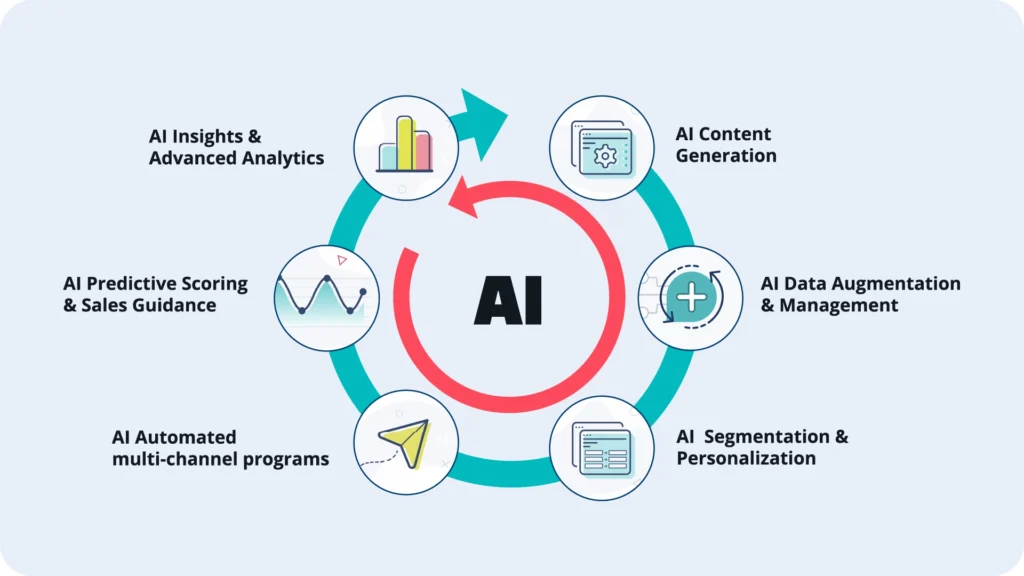
The rise of artificial intelligence in marketing is not merely a trend; it signifies a fundamental shift in the way you can approach your email campaigns. AI technologies enable you to analyze vast amounts of data swiftly, learning from patterns that may have gone unnoticed by human eyes. The power of machine learning means that you can predict customer behaviors, segment your audience more effectively, and deliver content that feels tailor-made for each recipient. This isn’t just about efficiency—it’s about elevating your marketing game to unprecedented levels.
Rise to the occasion by harnessing these AI tools to refine your email marketing approach. Strive to go beyond traditional metrics and utilize predictive analytics to forecast trends in customer behavior. With AI, you can identify the best times to send emails, the most engaging subject lines, and even personalized recommendations that align perfectly with each subscriber’s history and preferences. Adopting an AI-driven strategy not only enriches your campaigns but also empowers you to make proactive decisions in your marketing strategy, leading to remarkably higher levels of engagement and satisfaction among your audience.
Unlocking Customer Insights with AI
The transformative power of artificial intelligence in email marketing lies in its ability to unlock deep customer insights that drive growth. Your understanding of customer behavior can shift dramatically through data-driven campaigns powered by AI. By analyzing engagement metrics, purchase history, and browsing habits, AI helps you to create a clearer picture of who your customers are, what they want, and how they interact with your brand. This understanding fuels the creation of targeted campaigns that not only resonate with your audience but also increase the likelihood of conversions.
Identifying Patterns and Trends
Identifying patterns and trends in customer behavior is where AI truly shines. As vast amounts of data flow through your marketing systems, AI algorithms dissect this wealth of information, highlighting correlations you may not have noticed otherwise. For example, you might discover that customers who engage with your content on social media are more likely to open emails sent in the late afternoon, allowing you to tailor your sending times for maximum impact. These insights open the door to smarter, data-driven decision-making that ensures your resources are utilized effectively.
Moreover, recognizing these patterns can lead to improved strategies over time. As you integrate AI insights into your campaigns, you’ll not only enhance your current marketing efforts but also build a longer-term view of where your market is heading. The ability to predict shifts in customer preferences before they happen empowers you to stay ahead of the curve, ensuring that your email marketing never feels stagnant or out of touch.
Creating Personalized Experiences
One of the most compelling ways AI can enrich your email marketing strategy is through the power of personalization. By leveraging insights from customer data, AI enables you to create messages tailored specifically to individual users, increasing engagement rates significantly. When customers receive emails that speak directly to their needs and preferences, they feel valued and understood. This personalized touch fosters loyalty and promotes a stronger emotional connection with your brand.
For instance, you might use AI to analyze past interactions and suggest products that align with a customer’s previous purchases. If a customer regularly buys fitness gear, a tailored email recommending the latest fitness accessories or workouts based on their purchase history could be more effective than a generic promotion. This personalized approach doesn’t just improve your email statistics; it cultivates a relationship where your brand becomes an indispensable part of your customers’ lives.
Predictive Analytics for Better Targeting
Experiences can be elevated to new heights with predictive analytics, which allows you to anticipate customer behavior and needs before they even manifest. By analyzing historical data, AI can forecast future purchasing trends and customer preferences, enabling you to serve your audience more effectively. This foresight means you can send the right message at the right time to the right person, thus maximizing the potential for engagement and conversion.
It’s crucial to implement predictive models that suit your specific customer segments. Through continuous learning, these models can become increasingly accurate, improving your ability to predict customer actions based upon various indicators. Investing in predictive analytics not only refines your targeting strategies but also positions your brand as a proactive entity that understands and responds to its customers increasingly well over time.
Building Effective Email Campaigns with AI
Unlike traditional email marketing strategies, which often rely on instinct and guesswork, leveraging AI allows you to build more effective email campaigns that resonate with your audience. By harnessing the power of data, you can gain insights into your customer behaviors, preferences, and trends, ultimately driving higher engagement rates and conversions. AI empowers you to make informed decisions about your email marketing strategy, ensuring that every campaign is not just a shot in the dark but a well-calibrated initiative aimed at achieving specific goals.
Crafting Compelling Subject Lines
One of the most critical elements of successful email marketing is the subject line; it’s the first thing your audience sees, and it has the potential to make or break your email’s performance. AI can analyze vast datasets to determine what types of subject lines have garnered the best open rates in the past. By understanding language patterns, emotional triggers, and even the optimal length of a subject line, you can create options that are more likely to catch the reader’s attention. Think of it as having a co-pilot, equipped with insights that map out the best ways to entice your audience.
Furthermore, A/B testing driven by AI can help you refine your subject lines over time. Imagine having the capability to test multiple variations with your audience, quickly identifying which resonates the most with your subscribers. The combination of data analysis and iterative testing allows you to fine-tune your messaging, ensuring that each subject line becomes a powerful tool for capturing interest and driving engagement.
Optimizing Email Content for Engagement
Optimizing your email content for engagement goes beyond just the visuals; it necessitates a deep understanding of your audience’s preferences and behaviors. With AI, you can analyze user interactions at a granular level, allowing you to pinpoint what content resonates with your subscribers. This insight enables you to craft personalized email messages that not only meet your audience’s needs but also pique their interest. You can leverage AI to evaluate various content formats—be it articles, videos, or images—and see which garners the most interaction.
The dynamic nature of AI also allows you to adjust your email content in real-time. By monitoring how your audience interacts with your emails, you can discover patterns that inform your marketing strategies. You may find that certain topics perform better based on the seasons or ongoing trends, allowing you to stay relevant and engaging. By utilizing predictive analytics, you can forecast content that will likely resonate with your subscribers, ensuring your emails continue to create value and encourage deeper engagement with your brand.
Timing is Everything: AI-Driven Send Time Optimization
For any email marketing campaign to thrive, timing plays an imperative role. AI-driven send time optimization uses machine learning algorithms to analyze when your audience is most likely to engage with their emails. This means going beyond the conventional wisdom of “best times to send” and tailoring your strategy to your specific audience’s behavior. By understanding their patterns, you can ensure your emails hit inboxes at the ideal moment, maximizing open rates and fostering engagement.
Subject to continual learning, AI models adapt over time, refining their predictions on audience behavior and engagement patterns. This adaptation means that what may work for one segment of your audience may not apply universally; thus, employing AI allows for a hyper-personalized approach to timing. As you gather more data and feedback from your campaigns, you can create a sending schedule that aligns seamlessly with your audience’s habits, making every interaction count.
AI-Powered Segmentation and Targeting
After harnessing the power of AI in your email marketing efforts, one of the most transformative shifts you’ll experience is in segmentation and targeting. Traditional methods of categorizing your audience often fall short, relying heavily on general demographics or past behaviors that may not accurately reflect your current audience’s preferences. With AI, you can create dynamic segmentation strategies that allow you to tailor your messaging to specific segments of your audience in real-time, enhancing engagement and driving conversions.
Dynamic Segmentation for Maximum Impact
Segmentation becomes dynamic when AI tools analyze vast amounts of data to determine the most relevant segments of your audience at any point in time. Rather than using static categories that can quickly become outdated, you can leverage AI to adapt your segmentation based on evolving user behavior, preferences, and even external factors. This not only ensures that your audience receives messages that resonate but also optimizes your overall marketing efforts by targeting those segments that are most likely to convert.
By continuously refining and updating your segments, you can seize opportunities as they arise, ensuring that your emails cut through the noise and remain relevant. This agility allows you to maintain a meaningful connection with your audience, fostering engagement and loyalty that translates to long-term growth.
Identifying High-Value Customers with AI
AIPowered tools can help you identify high-value customers with unparalleled precision. Rather than relying on guesswork or outdated customer data, AI analyzes a wealth of information—including purchasing habits, engagement metrics, and even social media interactions—to uncover those individuals who are not just engaged but are also likely to generate significant revenue for your business. By focusing your efforts on these high-value customers, you can create targeted campaigns that speak directly to their needs and preferences, maximizing your return on investment.
Identifying these customers is about understanding their behaviour and patterns, allowing you to refine your approach consistently. This process empowers you to make informed decisions on how best to nurture these significant relationships through tailored content and offers.
Hyper-Personalization for Increased Conversions
Increased conversions stem from a deeper understanding of individual customer needs and preferences. Employing hyper-personalization techniques means crafting emails that go beyond simply addressing a recipient by name. With AI, you can analyze customer data to deliver tailored product recommendations, targeted promotions, and customized content that speaks directly to your audience’s interests and behaviors. This level of personalization not only enhances the user experience but also greatly increases the chances of conversion.
Segmentation plays a crucial role in achieving this hyper-personalized approach. By grouping customers according to detailed insights provided by AI, you can ensure that you’re sending the right messages at the right time, while also adapting quickly as customer behaviors change. This data-driven understanding enables you to transform your email campaigns into powerful tools for growth, ultimately allowing you to nurture leads and build lasting customer relationships.
Measuring Success with AI-Driven Metrics
Despite the significant advancements in technology, many marketers still rely heavily on basic metrics such as open rates to gauge the success of their email campaigns. While open rates provide a glimpse into how well your subject lines are performing, they tell only part of the story. In the world of AI-driven marketing, you have access to more sophisticated metrics that allow you to dive deeper into consumer behavior and campaign effectiveness. By leveraging these insights, you can better gauge the true impact of your campaigns and identify opportunities for improvement that might otherwise go unnoticed.
Beyond Open Rates: Advanced Email Metrics
On your journey to mastering email marketing, it’s vital to stretch beyond open rates and familiarize yourself with more advanced metrics. By looking at the bigger picture, you can implement data-driven strategies that not only enhance immediate campaign performance but also contribute to long-term growth. Consider the following metrics:Advanced Email Metrics
| Understanding these metrics can empower you to tailor your content and optimize the customer journey from inbox to action. |
Using AI to Identify Areas for Improvement
Areas that might have once seemed ambiguous are now illuminated through the lens of AI-driven insights. With machine learning algorithms at your disposal, you can analyze subscriber engagement patterns, pinpoint the most effective sender names, and even determine the optimal times to send your campaigns. This level of granularity allows you to implement targeted strategies that resonate more deeply with your audience, fostering a greater sense of loyalty and driving higher conversion rates.
This newfound clarity extends beyond merely identifying weaknesses; it positions you to anticipate consumer preferences before they are even voiced. By continuously monitoring engagement levels and testing different elements of your emails—like layout, content, and call-to-action buttons—you can continually refine your strategies and adapt according to your audience’s tastes. Embracing this cycle of innovation is vital for maintaining a competitive edge in the rapidly evolving field of email marketing.

Data-Driven Decision Making for Email Marketing
Using a data-driven approach in your email marketing strategy enables you to make informed decisions that align with your overall business objectives. With AI tools, you can analyze past campaigns to inform future initiatives, ensuring that your efforts are not just reactive but proactively shaped by evidence and insights. This transformation from instinct-driven tactics to metrics-based strategies can elevate your email marketing, making it not just effective but genuinely transformative.
Metrics guide you in understanding customer behavior, allowing you to create more personalized and relevant content. By focusing on subscriber preferences and emerging trends, you can allocate resources effectively and enhance your ability to connect with your audience on an emotional level. As Malcolm Gladwell might suggest, this is where the magic happens—at the intersection of raw data and deep understanding, where basic marketing techniques evolve into compelling, human-centric strategies.
Overcoming Common Challenges in AI-Driven Email Marketing
For anyone venturing into AI-driven email marketing, recognizing the hurdles that may arise is crucial for success. These challenges, if left unaddressed, can stifle the effectiveness of your campaigns and prevent you from reaching your growth objectives. By identifying and strategizing around these common issues, you can harness the full power of AI to elevate your email marketing efforts.
Addressing Data Quality Issues
Quality is the cornerstone of effective AI-driven email marketing. If your data is incomplete, outdated, or inaccurate, the insights generated from it will be misleading, leading you to make flawed decisions. It’s necessary to institute robust data cleansing processes regularly, ensuring that you gather and use accurate customer data consistently. This may involve implementing validation techniques and maintaining a disciplined approach to capturing new leads, so that your datasets remain pristine and actionable.
Moreover, focusing on data integration is equally important. By combining data from various sources—like your website analytics, CRM systems, and social media platforms—you can create a multi-dimensional view of your audience. This holistic understanding not only boosts your segmentation strategies but also assists AI algorithms in delivering more relevant and personalized content to your subscribers, ultimately improving engagement rates.
Managing AI-Driven Campaigns for Maximum ROI
To maximize the return on investment (ROI) of your AI-driven campaigns, it’s vital to establish clear performance metrics from the outset. This allows you to analyze which strategies work best, leading to informed adjustments that enhance overall effectiveness. Continuous monitoring and optimization are key; by leveraging AI’s predictive capabilities, you can forecast customer behavior and tailor your email content to meet their needs before they even express them.
For instance, employing A/B testing to analyze different subject lines, call-to-action buttons, or email layouts can yield invaluable insights. The data collected can reveal your audience’s preferences, enabling you to refine your approach continually. By systematically testing and iterating your campaigns, you can enhance user engagement and ultimately drive higher sales conversions.
Balancing Human Touch with AI Automation
Human connection plays a pivotal role in marketing, even in an increasingly automated world. While AI can handle the heavy lifting by analyzing data and optimizing campaigns, you must ensure that your emails resonate on a personal level. Inferencing customer emotions and anticipating their sentiments through complex algorithms can create a foundation for optimized outreach; however, capturing the nuances of human interaction remains an art that AI cannot entirely replicate. Don’t shy away from adding personal touches that only you can provide, such as personalized greetings or ad-hoc acknowledgments of life milestones.
Moreover, maintaining a balance between automation and a human touch will enhance your brand’s authenticity. While AI’s capabilities streamline many processes, an overly robotic approach can alienate your audience. Therefore, blending automated communications for efficiency with personalized elements fosters trust and engagement with your subscribers.
Challenges may arise when finding the right balance between leveraging AI’s speed and the nuances of human empathy. While technology can efficiently deliver emails, listening to your audience and cultivating genuine relationships remains paramount. Embracing both realms can lead to a harmonious ecosystem of marketing that drives growth and nurtures customer loyalty.
Final Words
Summing up, navigating the ever-evolving landscape of email marketing can feel overwhelming, but leveraging AI insights transforms this challenge into an opportunity for growth. By harnessing data-driven strategies, you can create campaigns that not only resonate with your audience but also drive tangible business results. Imagine having the capacity to anticipate customer behavior, tailor your message, and optimize your outreach based on real-time insights—this is the power of integrating AI into your email marketing efforts.
As you embrace this technology, remember that the key lies in understanding your audience and aligning your campaigns with their preferences and needs. With AI, you’re not just sending emails; you’re curating experiences that foster engagement and loyalty. So why not take a step forward today? By tapping into AI-driven email marketing strategies, you’ll not only elevate your campaigns but ultimately, position your brand for sustainable growth in an increasingly competitive market.
FAQ
Q: What are AI Insights in Email Marketing?
A: AI Insights refer to the use of artificial intelligence technology to analyze data related to email marketing campaigns. This includes assessing subscriber behavior, engagement metrics, and other relevant data to provide actionable recommendations for optimizing campaigns. By leveraging AI, marketers can personalize content, predict customer preferences, and improve overall campaign performance, leading to increased engagement and conversions.
Q: How can AI improve the effectiveness of my email marketing campaigns?
A: AI can enhance the effectiveness of email marketing campaigns through predictive analytics, segmentation, and personalization. By analyzing past customer behavior and engagement, AI can help identify trends, forecast future actions, and suggest the best times to send emails. Furthermore, AI can segment your audience based on various attributes, ensuring that the right content reaches the right people, which significantly boosts engagement rates and conversions.
Q: What type of data should I be collecting to maximize AI insights for my campaigns?
A: To maximize AI insights for email marketing campaigns, you should collect a variety of data types, including demographic information (age, gender, location), engagement metrics (open rates, click-through rates, conversion rates), behavior data (past purchase history, website interactions), and preferences (email frequency, content interests). This comprehensive data allows AI to provide more tailored insights, enabling more effective targeting and personalization strategies.
Q: Are there any specific tools or platforms that utilize AI for email marketing?
A: Yes, various tools and platforms leverage AI for email marketing, offering features such as automation, analytics, and personalization. Notable examples include Mailchimp, HubSpot, SendinBlue, and ActiveCampaign. These platforms provide AI-driven functionalities like predictive segmentation, email performance analysis, and drag-and-drop email builders integrated with AI capabilities, making it easier for marketers to execute data-driven campaigns.
Q: How do I start implementing AI Insights into my current email marketing strategy?
A: To start implementing AI Insights into your email marketing strategy, follow these steps: 1) Assess your current data collection practices and ensure you are gathering useful information. 2) Choose an email marketing platform that offers AI capabilities. 3) Begin by integrating AI features into your campaigns, such as using predictive analytics to identify optimal send times or segment your audience effectively. 4) Continuously monitor results and adjust your strategy based on AI insights, ensuring you evolve with your audience’s changing preferences and behaviors.
Author


Never Split the Difference: Negotiating as if Your Life Depended on It
$20.47 (as of October 5, 2026 17:53 GMT +00:00 – More infoProduct prices and availability are accurate as of the date/time indicated and are subject to change. Any price and availability information displayed on [relevant Amazon Site(s), as applicable] at the time of purchase will apply to the purchase of this product.)
Unreasonable Hospitality: The Remarkable Power of Giving People More Than They Expect (The Unreasonable Hospitality Collection)
$14.53 (as of October 5, 2026 17:53 GMT +00:00 – More infoProduct prices and availability are accurate as of the date/time indicated and are subject to change. Any price and availability information displayed on [relevant Amazon Site(s), as applicable] at the time of purchase will apply to the purchase of this product.)
Procrastinators Get Stuff Done: How to Go from Overwhelmed to Finished
$18.89 (as of October 5, 2026 17:54 GMT +00:00 – More infoProduct prices and availability are accurate as of the date/time indicated and are subject to change. Any price and availability information displayed on [relevant Amazon Site(s), as applicable] at the time of purchase will apply to the purchase of this product.)
The AI-Driven Leader: Harnessing AI to Make Faster, Smarter Decisions
$13.13 (as of October 5, 2026 17:54 GMT +00:00 – More infoProduct prices and availability are accurate as of the date/time indicated and are subject to change. Any price and availability information displayed on [relevant Amazon Site(s), as applicable] at the time of purchase will apply to the purchase of this product.)


Leave a Reply