
Still relying only on Google to attract customers? You’re missing the five other places people actually search before buying. Here’s why 27-31% of searches now happen through voice assistants—and what that means for your visibility strategy.
Key Takeaways
- Search Everywhere Optimization (SEvO) helps small businesses capture customers across Google, AI tools, social platforms, voice search, reviews, and media mentions – not just traditional SEO
- Modern customers use multiple platforms before making buying decisions – appearing on only Google means missing 5-6 other touchpoints where competitors could win the sale
- Voice search now accounts for an estimated 27-31% of all queries, while AI tools like ChatGPT process an estimated 858 million to over 1 billion monthly active users – both requiring different optimization strategies than Google
- A single content piece can serve all six SEvO platforms through strategic repurposing, making multi-platform visibility achievable for busy business owners
- The businesses implementing SEvO framework now are positioning themselves ahead of competitors who haven’t considered these emerging search channels
The days of relying solely on Google rankings for business growth are over. Today’s customers search everywhere – asking AI tools for recommendations, watching YouTube tutorials, checking Reddit discussions, and using voice assistants to find local services. Small businesses that master this multi-platform approach are capturing leads their competitors never knew existed.
Why Traditional SEO Must Evolve Beyond Google Rankings
Traditional SEO focuses on one destination: Google’s blue links. But customer behavior in 2026 tells a different story. A homeowner researching kitchen renovation might watch YouTube videos for inspiration, ask ChatGPT what questions to ask contractors, check Google Reviews for validation, and browse Reddit threads about local providers – all before visiting a single website.
This fragmented journey means businesses optimizing only for Google are invisible during most of the decision-making process. Over 60% of Google searches now result in zero clicks, with AI Overviews and featured snippets answering questions directly on the search page. Meanwhile, alternative search channels are capturing growing market share, creating new opportunities for businesses willing to expand their visibility strategy.
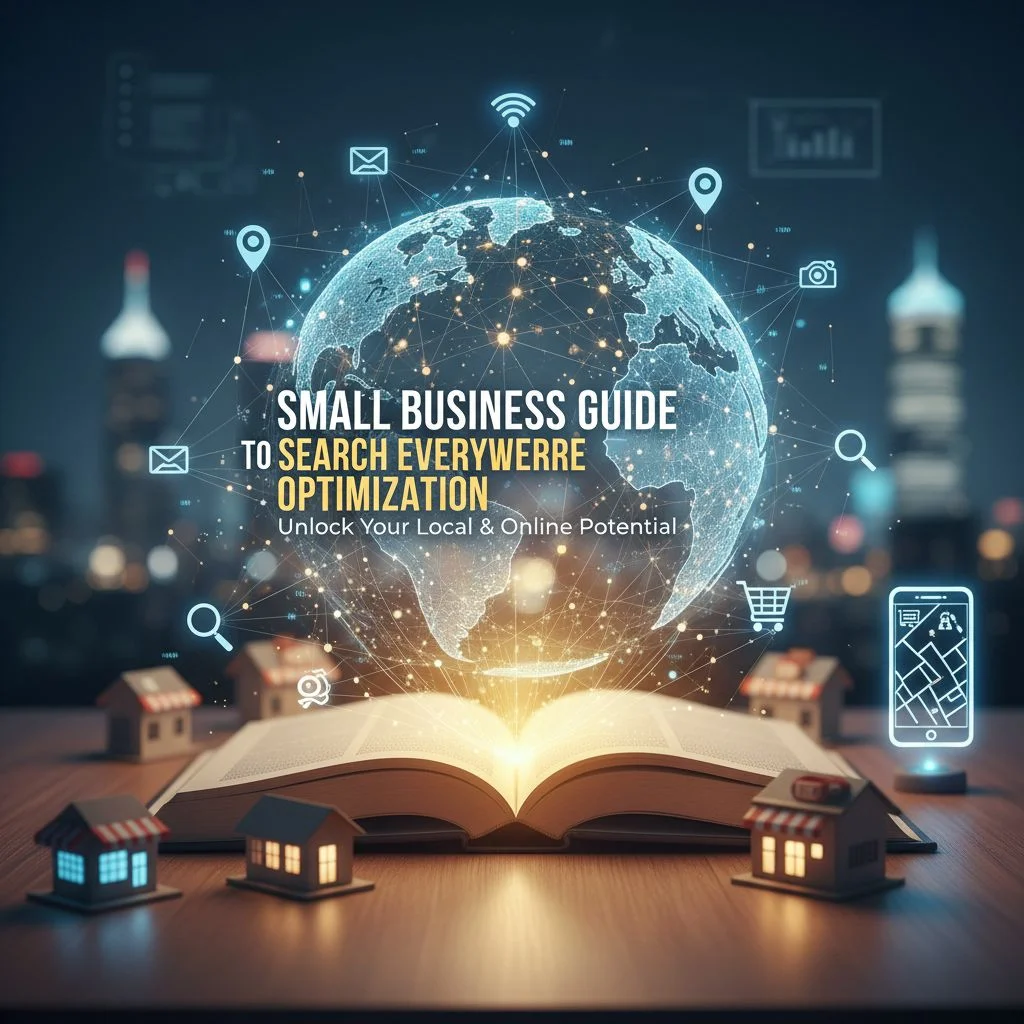
The concept of Search Everywhere Optimization is a framework that addresses this shift, helping small businesses build discoverable presence across all customer touchpoints rather than depending on a single traffic source.
The vulnerability of single-channel thinking becomes clear when competitors start appearing in the channels you’re ignoring. A business that earns AI recommendations, maintains active social presence, and gets featured in local media creates multiple pathways to the same customer – while competitors focused only on Google rankings fight over increasingly limited organic real estate.
Where Your Customers Actually Search in 2026
Understanding modern search behavior requires mapping the complete customer journey across platforms. Each search surface serves different intent stages and demographic preferences, creating a complex but predictable discovery ecosystem that smart businesses can navigate strategically.
AI Tools Capture Growing Share of Search Behavior
ChatGPT now processes an estimated 858 million to over 1 billion monthly active users, representing 17.1% of all digital queries. Google’s AI Overviews, powered by Gemini, now reach 2 billion monthly users across more than 200 countries. These aren’t supplementary tools – they’re becoming primary research channels, especially for complex decisions requiring detailed explanations or comparisons.
AI search operates differently than traditional search engines. Instead of showing multiple options, AI tools synthesize information and often provide single recommendations based on credibility signals across the web. A business either gets recommended or remains invisible – there’s no position two in AI results.
The businesses earning consistent AI recommendations share common characteristics: clear entity information across all platforms, structured content that AI can extract easily, and strong third-party citations that establish authority. These signals work together to convince AI systems that a business represents the best answer to customer questions.
Social Platforms Replace Google for Discovery
Social media platforms have evolved into search engines with massive, engaged audiences. YouTube is widely considered the world’s second-largest search engine by query volume. TikTok and Instagram have become primary discovery channels for younger consumers, with many bypassing Google entirely for initial product and service research.
Each social platform rewards different content approaches. YouTube favors detailed explanatory videos that answer specific customer questions. Reddit values genuine expert contributions to community discussions. TikTok amplifies authentic, location-specific content that builds brand recognition. LinkedIn serves as the primary professional authority platform for B2B searches.
The key insight is that social search behavior differs fundamentally from Google search. Users aren’t just looking for information – they want to see real businesses in action, read honest discussions from actual customers, and find options through community recommendations rather than algorithmic rankings.
Voice Search Reaches Estimated 27-31% of All Queries
Voice assistants now handle an estimated 27-31% of all search queries, with particularly strong adoption for local and urgent requests. When someone asks Siri for a plumber or Alexa for restaurant recommendations, they receive a single spoken answer – making voice search a winner-takes-all channel where second place equals invisibility.
Voice queries tend to be conversational and action-oriented. Users don’t search for “plumber Nashville” – they ask “Can you help me find someone to fix my sink today?” This natural language requires businesses to optimize for question-based content and maintain complete, accurate local business information across all platforms.
Voice search success correlates strongly with other SEvO factors: complete Google Business Profile data, recent customer reviews, structured FAQ content, and consistent business information across directories. The businesses appearing in voice recommendations typically excel across multiple search channels simultaneously.
The 6-Platform SEvO Framework
Search Everywhere Optimization organizes multi-platform visibility around six core pillars, each requiring specific optimization strategies while working together to create visibility across all channels. This framework ensures businesses appear wherever their customers search, compare, validate, and decide.
1. Traditional Search – Google and Bing Foundation
Google still processes an estimated 8.5 billion to 16.4 billion daily searches and maintains a global search engine market share of approximately 87.5% to 91.4%, making traditional SEO the foundation of any visibility strategy. However, the focus has shifted from broad keyword targeting to high-intent, transactional queries where customers are ready to take action.
Modern Google optimization emphasizes local search optimization, Google Business Profile management, and content structured for AI extraction. Since Google’s AI Overviews now answer many informational queries directly, businesses should prioritize commercial intent keywords where click-through rates remain strong.
The most effective approach combines traditional SEO techniques with AI-friendly content structure. Every page should include direct-answer first sentences, FAQ sections with proper schema markup, and clear entity signals that both Google’s algorithm and AI systems can understand and reference.
2. AI Search – ChatGPT and Perplexity Optimization
AI search optimization requires understanding how large language models evaluate and recommend businesses. AI systems synthesize information from multiple sources, weight credibility signals, and often provide single recommendations based on authority indicators across the entire web ecosystem.
Successful AI optimization focuses on entity clarity (consistent business information everywhere), citation density (third-party mentions from trusted sources), and content extractability (structured information AI can easily parse and quote). Businesses need complete schema markup, conversational FAQ content, and strong external validation signals.
The businesses earning regular AI recommendations typically have robust media coverage, active community participation, and content specifically structured to answer customer questions directly. AI systems favor businesses with clear expertise signals and independent verification from trusted sources.
3. Social Search – YouTube, TikTok, and Reddit Presence
Social platforms serve different discovery functions in the customer journey. YouTube excels for educational content and detailed explanations. TikTok builds brand awareness through authentic, local demonstrations. Reddit provides community validation through genuine expert contributions.
Each platform requires platform-specific content strategies. YouTube videos should answer specific customer questions with uploaded transcripts for AI indexing. Reddit contributions should offer genuine expertise in relevant community discussions. TikTok content should showcase real work, real locations, and authentic team members.
The most efficient approach creates interconnected content across platforms rather than isolated posts. A single expert insight can become a YouTube video, Reddit contribution, and TikTok demonstration, multiplying reach while maintaining consistent messaging across all social search channels.
4. Voice Search – Siri and Alexa Recommendations
Voice optimization requires conversational content structure and complete local business data. Voice assistants pull answers from structured data sources, prioritizing businesses with accurate information, recent reviews, and clear entity signals across multiple platforms.
Successful voice optimization focuses on natural language FAQ content, complete Google Business Profile data, speakable schema markup, and consistent NAP (name, address, phone) information across all directories. Voice assistants favor businesses with strong local authority signals and recent customer validation.
Local businesses particularly benefit from voice search optimization since many voice queries involve urgent, location-specific needs. A complete voice strategy ensures businesses appear when customers need immediate solutions and are ready to hire quickly.
5. Review Platforms – Trust and Validation Signals
Review platforms serve dual functions: converting customers who are already considering the business and providing authority signals for AI systems making recommendations. Recent, detailed reviews influence both human behavior and machine learning algorithms that determine business credibility.
Effective review strategy emphasizes consistent collection, professional responses, and platform diversity. Businesses should maintain presence on Google Reviews, industry-specific platforms, and general review sites while implementing systematic collection processes for satisfied customers.
Review velocity and recency matter more than total count. AI systems weight recent reviews more heavily when determining which businesses to recommend, making consistent collection more valuable than large historical volumes of older feedback.
6. External Media – Third-Party Authority Building
External media mentions provide the strongest authority signals across all other SEvO pillars simultaneously. Media coverage feeds AI citation authority, creates social sharing opportunities, validates business credibility for review platforms, and strengthens traditional SEO through high-quality backlinks.
AI systems synthesize information from multiple sources and often provide recommendations based on credibility signals, with strong third-party citations establishing authority. This means most AI visibility depends on what trusted publications say about a business, not what the business says about itself.
Small businesses can build media presence through expert contributions to industry publications, local news story angles, and strategic content distribution. The compounding effect of external mentions makes media coverage the highest-leverage investment in the entire SEvO framework.
Business-Type Priority Matrix
Different business types should prioritize SEvO pillars based on their customer behavior patterns and buying journey characteristics. Strategic focus ensures maximum impact from limited time and resources while building visibility across all channels over time.
Local Services Focus on Voice and Reviews First
Local service businesses benefit most from immediate-intent channels where customers need solutions quickly. Voice search, Google Business Profile optimization, and review collection should receive primary focus since local customers often search with urgency and high conversion intent.
The priority order for local services: Voice/Local (Pillar 4) → Google/GBP (Pillar 1) → Reviews (Pillar 5) → AI Search (Pillar 2) → Media (Pillar 6) → Social (Pillar 3). This sequence captures high-intent local traffic first, then builds broader visibility across emerging channels.
Local businesses should emphasize complete Google Business Profile management, systematic review collection, conversational FAQ content, and local media opportunities. These foundations create strong voice search signals while establishing the trust indicators that AI systems use for local recommendations.
Professional Services Prioritize AI and Media Coverage
Professional service businesses serve customers who research extensively before making contact. These buyers increasingly use AI tools for initial research and value third-party validation of expertise, making AI search and media presence critical for early-stage visibility.
The priority order for professional services: AI Search (Pillar 2) → Media (Pillar 6) → Google (Pillar 1) → LinkedIn/Reddit (Pillar 3) → Reviews (Pillar 5) → Voice (Pillar 4). This approach captures research-stage prospects and establishes credibility before they evaluate specific providers.
Professional services should focus on expert content creation, media contributions, LinkedIn thought leadership, and Reddit community participation. These activities build the authority signals that AI systems reference when recommending professional service providers to researching prospects.
E-commerce Businesses Lead with Social Discovery
Product businesses benefit from visual discovery channels where customers can see items in use, compare options, and read authentic reviews from other buyers. Social platforms and review sites drive product discovery more effectively than traditional search for many categories.
The priority order for e-commerce: Google Shopping (Pillar 1) → Social/Visual (Pillar 3) → Reviews (Pillar 5) → AI Search (Pillar 2) → Media (Pillar 6) → Voice (Pillar 4). This sequence captures purchase-ready traffic while building discovery through visual and social channels.
E-commerce businesses should emphasize YouTube product demonstrations, TikTok discovery content, Instagram visual appeal, review collection, and Google Shopping optimization. These channels work together to capture customers throughout the product research and comparison process.
One Content Asset Strategy for All 6 Platforms
The biggest objection to SEvO implementation is bandwidth – creating content for six platforms seems overwhelming for busy business owners. The solution involves strategic content repurposing that serves multiple platforms from a single creation effort, maximizing reach while minimizing production time.
Create Your Anchor Content Piece
Start with one expert-level article on your website targeting a specific customer question. Structure it with direct-answer first sentences, question-based subheadings, FAQ sections with proper schema markup, and clear author credentials. This single piece becomes your foundation for all platform-specific adaptations.
The anchor piece should demonstrate genuine expertise through specific insights, original data, or professional experience that competitors cannot easily replicate. Include local references, industry-specific details, and actionable advice that provides real value to readers while establishing your business as a credible authority.
Focus on evergreen topics with consistent search volume rather than trending subjects that quickly lose relevance. The anchor piece will serve multiple platforms for months or years, making thorough coverage more valuable than timely commentary.
Repurpose Across Platforms Systematically
Transform the anchor piece into platform-specific content formats. Record a YouTube video using the article as a script outline, complete with uploaded transcript for AI indexing. Extract the most specific expert insight for a detailed Reddit contribution in relevant community discussions.
Create a TikTok or Instagram reel highlighting the most surprising finding from your article. Film yourself explaining the insight with authentic local context – show your workspace, reference your location, demonstrate genuine expertise through natural delivery rather than scripted presentation.
Use the article’s core insights for LinkedIn posts that establish professional authority. Structure these as industry observations or expert commentary rather than promotional content, building credibility that translates into business inquiries from professional network connections.
Submit the full anchor piece for media distribution if it contains original research, compelling local angles, or industry insights that publications value. Quality media placement amplifies the content across hundreds of editorial sites, creating citation density that benefits all other SEvO pillars simultaneously.
Free Measurement Tools for Each Platform
Measuring SEvO effectiveness doesn’t require expensive enterprise software. Free tools provide adequate tracking for small business decision-making while establishing baseline metrics that justify expanded investment in successful channels.
Track Google Search Console and Branded Volume
Google Search Console provides traditional search tracking including impressions, clicks, and average positions for target keywords. Separate branded searches (your business name) from non-branded searches (service categories) to understand both direct and discovery traffic patterns.
Branded search volume serves as the most important composite metric across all SEvO pillars. Rising branded searches indicate improving visibility across multiple channels – AI recommendations, social discovery, voice mentions, and media coverage all typically drive customers to search business names directly before making contact.
Monitor local search performance through Google Business Profile insights, tracking profile views, search queries, and customer actions. These metrics directly correlate with voice search visibility and local AI recommendations.
Monitor AI Mentions and Social Engagement
Test AI visibility manually by querying ChatGPT, Perplexity, and Google AI Mode with 20 relevant customer questions monthly. Track mention frequency and recommendation context to understand AI positioning relative to competitors.
Use platform-native analytics for social search tracking. YouTube Studio provides search traffic data and discovery analytics. LinkedIn analytics show content reach and profile views. Reddit contribution tracking shows community engagement and upvote patterns that indicate content quality and authority.
Set up Google Alerts for business name mentions across web content and news sources. This free tool captures media coverage, blog mentions, and third-party citations that contribute to overall authority signals.
Measure Review Velocity and Media Coverage
Track new review count monthly across Google, industry-specific platforms, and general review sites. Monitor average rating trends and review velocity compared to direct competitors in your market area.
Document media mentions, editorial features, and third-party citations monthly. Track the authority level of publications mentioning your business, as high-domain-authority citations carry more weight in AI systems than mentions from low-quality sites.
Use voice assistant testing to check recommendation status. Ask your five most important customer questions using Siri, Alexa, and Google Assistant monthly, noting which businesses receive recommendations and how your business compares in voice search results.
Small Businesses Can Build Multi-Platform Visibility with Strategic Implementation
Search Everywhere Optimization represents a fundamental shift from single-channel dependence to visibility across the modern search ecosystem. Small businesses implementing SEvO now position themselves ahead of competitors still focused solely on traditional Google rankings.
The framework succeeds because it matches actual customer behavior rather than fighting against platform evolution. Customers already search everywhere – businesses that appear everywhere capture opportunities their competitors miss entirely.
Success requires strategic prioritization based on business type, systematic content repurposing that maximizes efficiency, and consistent measurement that identifies the most productive channels for continued investment.
The businesses building multi-platform visibility today will dominate their markets as search behavior continues evolving toward AI tools, social platforms, and voice assistants. SEvO isn’t just about adapting to change – it’s about getting ahead of the shift while competitors are still learning it exists.
Ready to implement Search Everywhere Optimization for your business? Business Startup Support helps small businesses build multi-platform visibility strategies that capture customers across every major search channel.
Author


Citizen Kim: The Woman Who Created the Future
$31.51 (as of October 18, 2026 17:16 GMT +00:00 – More infoProduct prices and availability are accurate as of the date/time indicated and are subject to change. Any price and availability information displayed on [relevant Amazon Site(s), as applicable] at the time of purchase will apply to the purchase of this product.)
The Art of Possibility: Transforming Professional and Personal Life
$10.68 (as of October 18, 2026 17:15 GMT +00:00 – More infoProduct prices and availability are accurate as of the date/time indicated and are subject to change. Any price and availability information displayed on [relevant Amazon Site(s), as applicable] at the time of purchase will apply to the purchase of this product.)
Roll the Calls: A Memoir
$18.11 (as of October 18, 2026 17:15 GMT +00:00 – More infoProduct prices and availability are accurate as of the date/time indicated and are subject to change. Any price and availability information displayed on [relevant Amazon Site(s), as applicable] at the time of purchase will apply to the purchase of this product.)
Bad Blood: Secrets and Lies in a Silicon Valley Startup
$17.72 (as of October 18, 2026 17:15 GMT +00:00 – More infoProduct prices and availability are accurate as of the date/time indicated and are subject to change. Any price and availability information displayed on [relevant Amazon Site(s), as applicable] at the time of purchase will apply to the purchase of this product.)


Leave a Reply