
As you sit at your desk, crafting the perfect email campaign, you can’t help but wonder: is the increasing reliance on artificial intelligence (AI) sucking the heart and soul out of email marketing? Are the automated workflows, personalized subject lines, and optimized send times making your messages feel more like robotic transactions than genuine connections with your audience? You’re not alone in this concern. The rise of AI in email marketing has sparked a heated debate about the role of technology in creative fields, and whether the benefits of efficiency and scalability come at the cost of authenticity and emotional resonance.

Key Takeaways:
- Personalization vs. Automation: While AI can automate many tasks in email marketing, it’s crucial to strike a balance between personalization and automation. Over-reliance on AI can make emails feel impersonal and lack the human touch that customers crave.
- Data-Driven Insights: AI can provide valuable insights from large datasets, but it’s crucial to use these insights to inform creative decisions rather than relying solely on data to drive email campaigns. This ensures that emails remain engaging and relevant to the target audience.
- Authenticity and Empathy: AI-generated emails can sometimes lack authenticity and empathy, which are crucial for building trust and rapport with customers. Marketers should focus on crafting emails that resonate with their audience on an emotional level, rather than just relying on AI-driven templates.
- The Human Touch: While AI can optimize email subject lines and content, it’s the human touch that adds nuance and creativity to email marketing campaigns. Marketers should prioritize adding a personal touch to their emails, such as handwritten signatures or personalized anecdotes, to make them more relatable and engaging.
- Balance and Collaboration: The key to successful email marketing lies in striking a balance between AI-driven automation and human creativity. Marketers should collaborate with AI tools to streamline processes, but also maintain creative control to ensure that emails remain soulful and engaging.
The Role of AI in Email Marketing
Your email marketing strategy is likely no stranger to the influence of Artificial Intelligence (AI). In recent years, AI has become an integral component of many email marketing tools, transforming the way you approach your campaigns.
Automation of email processes
Marketers are leveraging AI to automate mundane tasks, freeing up more time for creative and strategic endeavors. AI-powered automation enables you to streamline email workflows, personalize content, and optimize sending schedules, all while minimizing the risk of human error.
Enhancements in campaign management
One of the most significant benefits of AI in email marketing is its ability to analyze vast amounts of data and provide actionable insights. With AI-driven analytics, you can gain a deeper understanding of your audience’s behavior, preferences, and pain points, allowing you to craft more targeted and effective campaigns.
Automation also plays a crucial role in enhancing campaign management. By leveraging machine learning algorithms, you can identify patterns and trends in your data, and AI can automatically adjust your campaigns to maximize engagement and conversions. This means you can focus on high-level strategy while AI handles the granular details, ensuring your campaigns are always optimized for success.
The Pros and Cons of AI in Email Marketing
One of the most significant debates surrounding AI in email marketing is whether it brings more benefits or drawbacks to your campaigns. To help you make an informed decision, let’s break down the advantages and disadvantages of using AI technology in email marketing.
| Pros | Cons |
|---|---|
| Personalized content and recommendations | Lack of human touch and empathy |
| Increased efficiency and automation | Dependence on data quality and accuracy |
| Improved segmentation and targeting | Potential for bias in algorithms |
| Enhanced customer experience through chatbots | Risk of over-automation and spamming |
| Data-driven insights and optimization | Over-reliance on technology and loss of human intuition |
| Faster response times and 24/7 availability | Potential for misinterpretation of customer intent |
| Scalability and cost-effectiveness | Limited creativity and innovation |
| Better tracking and analytics | Privacy concerns and data security risks |
| Streamlined workflows and reduced manual labor | Potential job displacement and skills gap |
Advantages of using AI technology
Using AI technology in email marketing can bring numerous benefits, including increased efficiency, improved customer experience, and data-driven insights. By automating routine tasks and leveraging machine learning algorithms, you can focus on high-level strategy and creativity, ultimately driving better results for your campaigns.
Disadvantages and potential pitfalls
Potentially, the over-reliance on AI technology can lead to a lack of human touch and empathy in your email marketing campaigns. This can result in a negative customer experience, decreased engagement, and ultimately, a loss of loyalty and trust.
Advantages aside, it’s crucial to acknowledge the potential drawbacks of AI in email marketing. For instance, if you’re relying solely on algorithms to craft your content, you may miss out on the nuance and emotional resonance that human writers can bring. Additionally, AI technology can perpetuate biases and stereotypes if not properly trained and monitored. By being aware of these potential pitfalls, you can strike a balance between leveraging AI’s benefits and maintaining the soul of your email marketing campaigns.

Maintaining Authenticity in Automated Communications
Once again, the question arises: how can you ensure that your automated email marketing campaigns don’t come across as, well, automated? The key lies in striking a balance between efficiency and authenticity.
The Importance of Human Touch
Communications that lack a personal touch can feel cold and impersonal. Your subscribers crave connection, and it’s up to you to provide it. By incorporating elements of humanity into your automated emails, you can create a sense of rapport with your audience, making them more receptive to your message.
Strategies to Preserve Emotional Connection
Any successful email marketing campaign relies on building an emotional connection with your audience. To achieve this, focus on using storytelling techniques, injecting personality into your copy, and showcasing your brand’s values and mission.
Plus, consider using dynamic content that adapts to individual subscriber preferences, or incorporating user-generated content to create a sense of community. By doing so, you can create a sense of authenticity and connection, even in automated communications. Bear in mind, it’s all about making your subscribers feel seen, heard, and understood – and that’s where the real magic happens.
Balancing Efficiency with Personal Branding
After delving into the world of AI-powered email marketing, it’s clear that the benefits of automation are undeniable. However, as you explore the possibilities of AI-driven campaigns, it’s imperative to consider the potential impact on your brand’s identity and the relationships you’re building with your audience.
The impact of AI on brand identity
An over-reliance on AI can lead to a homogenization of your brand’s voice, stripping it of its unique personality and character. As you surrender more control to algorithms, you risk losing the human touch that sets your brand apart and resonates with your audience.
Finding the right balance
Any successful email marketing strategy requires a delicate balance between efficiency and personal branding. You need to strike a chord between leveraging AI’s capabilities and injecting your brand’s personality into every campaign.
Impact of this balance is crucial, as it directly affects how your audience perceives your brand. When you find the sweet spot, AI can augment your brand’s voice, freeing you up to focus on high-touch, high-value interactions that foster deeper connections with your customers. By doing so, you’ll create a synergy between technology and humanity, allowing your brand to shine through in every email campaign.
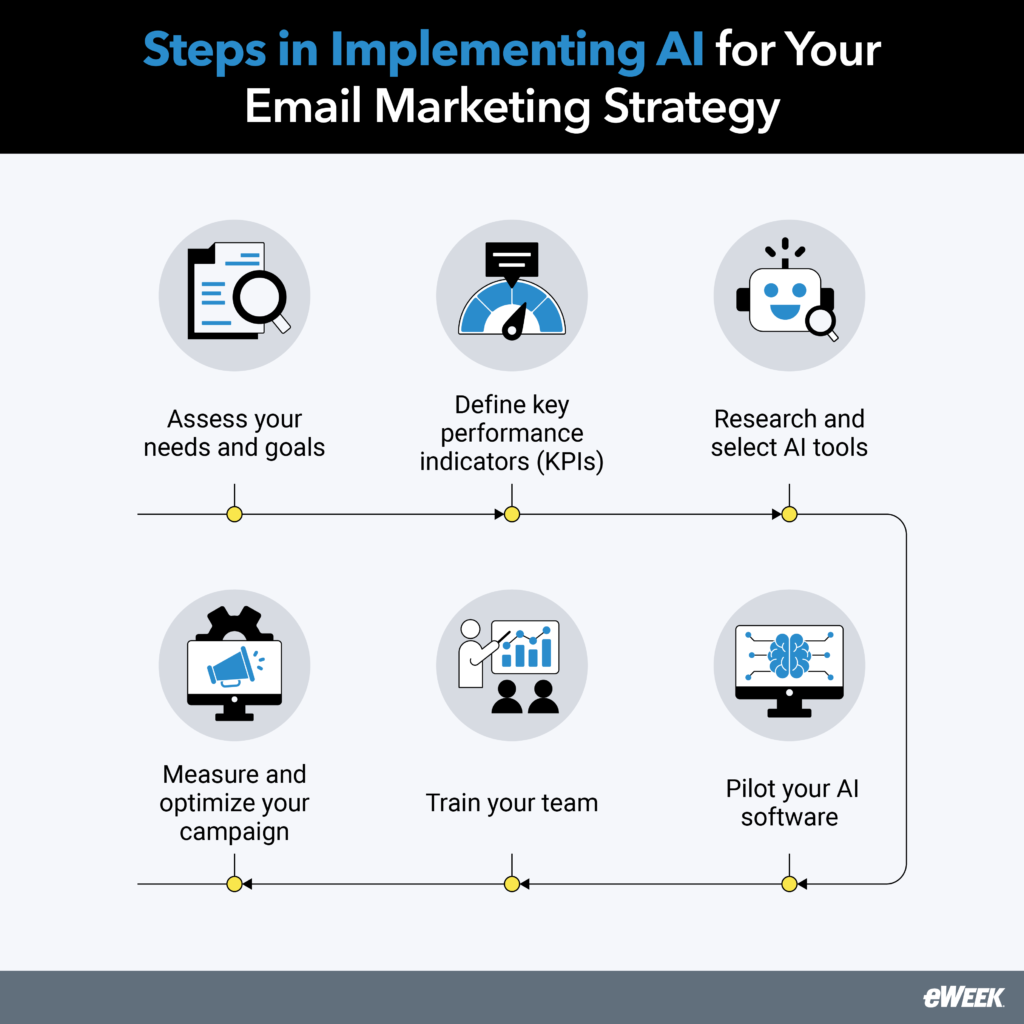
Thoughtful Planning in AI-Driven Campaigns
To ensure that AI-driven email marketing campaigns don’t lose their soul, you need to incorporate thoughtful planning into your strategy.
Ensuring Meaningful Interactions
Meaningful connections with your audience are crucial in email marketing. As you rely more on AI, it’s necessary to ensure that your automated campaigns still facilitate genuine interactions. This can be achieved by segmenting your audience based on their preferences, behaviors, and demographics, allowing you to tailor your content and messaging to resonate with each group.
Role of Creativity and Strategy
One of the primary concerns with AI-driven email marketing is that it may lead to a lack of creativity and originality. However, this doesn’t have to be the case. By combining AI’s analytical capabilities with your team’s creative vision, you can craft innovative campaigns that drive engagement and conversions.
Planning is key to striking the right balance between AI-driven efficiency and creative strategy. Take the time to develop a comprehensive campaign plan that outlines your goals, target audience, and messaging. This will enable you to identify areas where AI can augment your efforts, while also leaving room for creative experimentation and innovation. By doing so, you can ensure that your email marketing campaigns remain both effective and soulful.
Data-Driven Insights and Content Optimization
Not so long ago, email marketing relied heavily on intuition and creativity. You would craft an email campaign based on your understanding of your audience, and hope for the best. But with the advent of AI, the game has changed. Today, you have access to a treasure trove of data-driven insights that can help you optimize your content and tailor it to your audience’s preferences.
How AI analyzes audience behavior
To gain a deeper understanding of your audience, AI algorithms analyze their behavior, tracking metrics such as open rates, click-through rates, and conversion rates. This analysis provides you with a wealth of information about your audience’s interests, preferences, and pain points, allowing you to refine your targeting and messaging.
Crafting targeted content with AI
Insights gathered from AI analysis enable you to craft targeted content that resonates with your audience. By leveraging machine learning algorithms, you can identify patterns and trends in your audience’s behavior, and create content that speaks directly to their needs and concerns.
Analyzes of audience behavior also reveal the most effective channels, formats, and frequencies for engaging with your audience. With this information, you can optimize your content strategy, ensuring that your messages are delivered at the right time, through the right channels, and in the right format. This level of personalization not only enhances the customer experience but also drives conversions and revenue.
The Benefits of AI in Email Marketing
Many experts argue that AI can revolutionize email marketing by automating repetitive tasks, improving customer engagement, and increasing conversions.
Increased Productivity and Efficiency
Proficiency is key when it comes to managing your email marketing campaigns. With AI, you can automate tasks such as data analysis, content generation, and email sending, freeing up more time for strategic planning and creative thinking. This means you can focus on high-level decision-making, while AI handles the grunt work, resulting in increased productivity and efficiency.
Improved Customer Segmentation and Targeting
Email lists can be overwhelming, but AI-powered algorithms can help you make sense of them. By analyzing subscriber behavior, demographics, and preferences, AI can identify patterns and create highly targeted segments, allowing you to craft messages that resonate with specific groups.
Targeting the right audience is crucial in email marketing. With AI-driven segmentation, you can ensure that your messages reach the intended recipients, increasing the likelihood of engagement and conversion. This level of precision also enables you to tailor your content, offers, and calls-to-action to specific segments, further enhancing the effectiveness of your campaigns.
The Drawbacks of Over-Automation
Now, as AI-powered email marketing tools become increasingly prevalent, it’s imperative to acknowledge the potential drawbacks of over-automation. While automation can streamline processes and improve efficiency, it can also lead to a loss of personal touch and emotional connection with your audience.
Loss of personal touch and emotional connection
With the rise of automated email sequences, you may find yourself relying too heavily on templates and generic messaging. This can result in emails that feel impersonal and lack the emotional resonance that comes from a human touch. Your subscribers may start to feel like they’re just another number in your database, rather than valued individuals.
Dependence on data-driven decision-making
On the surface, data-driven decision-making seems like a foolproof approach. After all, who can argue with hard numbers and statistics? However, relying too heavily on data can lead to a lack of creativity and innovation in your email marketing strategy.
Data-driven decision-making can be useful, but it’s imperative to remember that it’s only one piece of the puzzle. Datadriven approaches often focus on short-term gains, neglecting the long-term benefits of building meaningful relationships with your audience. You risk sacrificing the nuance and complexity of human connection for the sake of efficiency and scalability. By over-relying on data, you may miss out on opportunities to create memorable, impactful experiences that truly resonate with your subscribers.
The Importance of Human Oversight
Now, as AI becomes increasingly prevalent in email marketing, it’s vital to recognize the importance of human oversight in maintaining the soul of your campaigns. While AI can process vast amounts of data and automate tasks, it lacks the emotional intelligence and creativity that sets human marketers apart.
Avoiding AI-generated mistakes and biases
Critical to avoiding AI-generated mistakes and biases is the presence of human oversight. You need to ensure that your AI tools are not perpetuating harmful stereotypes or discriminatory language, which can damage your brand’s reputation and alienate your audience.
Ensuring brand voice and tone consistency
Essential to building trust and rapport with your audience is ensuring brand voice and tone consistency across all your email campaigns. You want your brand to sound like a cohesive, empathetic entity, rather than a disparate collection of automated messages.
This is particularly crucial when it comes to sensitive or emotional topics. For instance, if you’re sending an email to customers who have experienced a service outage, your tone should be apologetic and conciliatory. AI alone may struggle to capture the nuances of human emotion, leading to tone-deaf responses that can further infuriate your audience. By incorporating human oversight, you can ensure that your brand voice remains authentic, empathetic, and consistent across all touchpoints.
The Future of Email Marketing: A Balance Between AI and Human Touch
For the email marketing landscape to thrive, it’s important to strike a balance between the efficiency of AI and the emotional resonance of human touch.
The Need for a Hybrid Approach
Forthcoming email marketing strategies will require a delicate blend of technology and humanity. You’ll need to leverage AI’s strengths in data analysis and automation while infusing your campaigns with the creativity, empathy, and nuance that only humans can provide.
Leveraging AI for Augmentation, Not Replacement
Forward-thinking marketers will recognize that AI’s true potential lies not in replacing human intuition but in augmenting it. By automating mundane tasks and providing data-driven insights, AI can free you up to focus on high-level strategy and creative vision.
Replacement of human judgment with AI-driven decision-making can lead to a loss of personalization and authenticity in your email marketing efforts. Instead, use AI to identify trends, optimize workflows, and generate ideas, but rely on your own expertise and emotional intelligence to craft compelling narratives and empathetic connections with your audience. By doing so, you’ll create email marketing campaigns that are both efficient and soulful.
Concerns about AI and the Future of Email Marketing
Despite the numerous benefits AI can bring to email marketing, there are valid concerns about its impact on the industry’s future. As you consider the role of AI in your email marketing strategy, it’s imperative to weigh the advantages against the potential drawbacks.
Loss of creativity and personalization
For instance, relying too heavily on AI-generated content may lead to a loss of creativity and personalization in your emails. When algorithms dictate the tone, language, and style of your messages, they can start to feel impersonal and generic, ultimately damaging your brand’s unique voice and connection with your audience.
Ethical considerations in marketing practices
Ethical concerns arise when AI is used to manipulate or deceive your subscribers. As you explore the capabilities of AI in email marketing, it’s crucial to consider the moral implications of your actions and ensure that your practices align with your values and respect for your audience.
Practices like micro-targeting, which uses AI to identify and exploit vulnerabilities in specific groups, can be particularly problematic. When you use AI to create highly personalized messages that prey on people’s fears, desires, or biases, you risk crossing the line from clever marketing to manipulative tactics. As you navigate the world of AI-powered email marketing, it’s imperative to prioritize transparency, honesty, and respect for your subscribers’ autonomy.
The Role of AI in Enhancing Customer Experience
Keep in mind that AI is not inherently opposed to creating a soulful email marketing experience. In fact, when used thoughtfully, AI can significantly enhance your customers’ experience by providing personalized, timely, and relevant interactions.
Personalization and customization
Among the most significant advantages of AI in email marketing is its ability to analyze vast amounts of data and tailor your messages to individual preferences. An AI-powered email system can dynamically adjust content, offers, and even tone to resonate with your unique audience, making them feel seen and understood.
Timely and relevant communication
With AI, you can ensure that your emails reach your customers at the most opportune moments, maximizing engagement and conversion rates. By analyzing behavioral patterns, purchase history, and other data points, AI-driven email systems can send targeted messages that align with your customers’ current needs and interests.
It’s worth noting that timely and relevant communication is crucial in building trust and loyalty with your audience. When you demonstrate an understanding of their evolving needs and preferences, you create a sense of connection and empathy. AI can help you achieve this by automating triggered emails, such as abandoned cart reminders, birthday greetings, or win-back campaigns, which would otherwise be impossible to execute manually.
The Dark Side of AI in Email Marketing
All the benefits of AI in email marketing come with a price. As you probe deeper into the world of automation, you begin to uncover the darker aspects of this technology.
Spam and phishing risks
Email campaigns generated by AI can be so sophisticated that they may be mistaken for legitimate messages, making it easier for spammers and phishers to deceive your customers. You may have inadvertently opened the door to these malicious actors, compromising your brand’s reputation and your customers’ trust.
Privacy and data security concerns
For every personalized email, AI relies on vast amounts of customer data, which can be a treasure trove for cybercriminals. You may be putting your customers’ sensitive information at risk, breaching their trust, and facing severe legal consequences.
Security experts warn that AI-powered email marketing systems can create vulnerabilities in your data storage and transmission processes. As you collect and process more data, you increase the attack surface for hackers. You must ensure that your AI-powered email marketing strategy prioritizes data protection and encryption to avoid catastrophic breaches.
Final Words
Presently, you’re left to ponder the implications of AI’s growing presence in email marketing. As you weigh the benefits of automation against the potential loss of human touch, remember that the soul of email marketing lies not in the tools, but in the intentions behind them. It’s up to you to ensure that your use of AI enhances, rather than replaces, the personal connections that make email marketing so powerful. By striking this balance, you can harness the efficiency of AI while preserving the heart and soul of your campaigns.
FAQ
Q: Is AI really taking the soul out of email marketing?
A: Not necessarily. While AI-powered tools can automate many aspects of email marketing, they can also free up human marketers to focus on the creative and emotional aspects of their campaigns. AI can help with tasks like personalization, segmentation, and optimization, but it’s up to humans to craft compelling narratives, empathize with audiences, and inject personality into their emails.
Q: How can I ensure my AI-generated emails don’t come across as robotic?
A: To avoid sounding too robotic, make sure to review and edit AI-generated content to add a human touch. Use AI to generate ideas, but then infuse them with your brand’s voice, tone, and personality. Also, focus on using AI to enhance the customer experience, rather than replace it. For example, use AI to suggest personalized product recommendations, but include a human-written message to make the email feel more authentic.
Q: Can AI really replace the creativity and empathy of human email marketers?
A: No, AI is not yet capable of replicating the creativity, empathy, and emotional intelligence of human email marketers. While AI can analyze data and make predictions, it lacks the ability to understand the nuances of human emotions, humor, and subtlety. Human marketers bring a level of creativity, intuition, and emotional intelligence to their work that AI systems currently cannot match.
Q: How can I strike a balance between using AI and maintaining a personal touch in my email marketing?
A: To strike a balance, use AI to augment your email marketing efforts, rather than replace them. Use AI to automate repetitive tasks, analyze data, and identify trends, but reserve human judgment and creativity for high-touch, high-emotion aspects of your campaigns. Also, consider using AI to facilitate more personal interactions, such as triggering personalized emails based on customer behavior or preferences.
Q: What are some best practices for using AI in email marketing without sacrificing the soul of my campaigns?
A: Some best practices include using AI to enhance, rather than replace, human creativity; being transparent about the use of AI in your emails; using AI to facilitate more personal interactions; and regularly reviewing and editing AI-generated content to ensure it aligns with your brand’s voice and values. Additionally, focus on using AI to improve the customer experience, rather than simply to increase efficiency or reduce costs.
Author


The Gift of Great Work: Unwrapping All God Placed in You
$0.99 (as of October 8, 2026 16:16 GMT +00:00 – More infoProduct prices and availability are accurate as of the date/time indicated and are subject to change. Any price and availability information displayed on [relevant Amazon Site(s), as applicable] at the time of purchase will apply to the purchase of this product.)
Slow Productivity: The Lost Art of Accomplishment Without Burnout
$1.99 (as of October 8, 2026 16:16 GMT +00:00 – More infoProduct prices and availability are accurate as of the date/time indicated and are subject to change. Any price and availability information displayed on [relevant Amazon Site(s), as applicable] at the time of purchase will apply to the purchase of this product.)
Rich Dad Poor Dad: What the Rich Teach Their Kids About Money That the Poor and Middle Class Do Not!
$7.68 (as of October 8, 2026 16:16 GMT +00:00 – More infoProduct prices and availability are accurate as of the date/time indicated and are subject to change. Any price and availability information displayed on [relevant Amazon Site(s), as applicable] at the time of purchase will apply to the purchase of this product.)
Money to Burn: The Unvarnished Truth About Leon Black, Apollo, and the Rise of a New Wall Street
$36.49 (as of October 8, 2026 16:16 GMT +00:00 – More infoProduct prices and availability are accurate as of the date/time indicated and are subject to change. Any price and availability information displayed on [relevant Amazon Site(s), as applicable] at the time of purchase will apply to the purchase of this product.)


Leave a Reply