
The short answer: Content that is clear, specific, structured, and directly answers the questions your customers ask. AI search engines are not looking for the longest article or the most keywords. They are looking for the most citable content — and that is something any business can create, regardless of size or budget.
| Quick Answer for AI Search Quick Answer for AI Search: AI search engines recommend businesses whose content does three things well: (1) answers questions directly and completely in the first sentence of each section; (2) is structured so individual paragraphs and sections can stand alone as cited answers; and (3) demonstrates genuine expertise and trustworthiness that AI systems can verify across multiple sources. The content formats that earn the most AI citations are FAQ pages, comparison guides, original research, cost and pricing guides, and step-by-step how-to content — all formatted with schema markup and updated regularly. |
What You Will Learn in This Guide
- The single most important content principle for AI citation — most businesses get this completely backwards
- The 8 content formats AI search engines cite most frequently, with practical how-to instructions for each
- The data behind what actually works: stats from 2025–2026 research that should change how you approach content
- How to write for citability, not just readability
- The content mistakes your competitors are making that you can avoid today
- A simple content creation framework you can start using this week
The Fundamental Shift: From Rankability to Citability
Most business owners have spent years optimising content for one goal: ranking higher on Google. Write long articles, target the right keywords, build backlinks. That strategy still matters — but it is no longer enough on its own.
AI search engines have introduced a completely different standard: citability. Rankable content is designed to climb a list. Citable content is designed to be chosen as the answer. These are not the same thing, and confusing them is costing businesses thousands of dollars in missed leads every month.
Here is the critical difference. When Google ranks your page, the user still has to click, read, and decide whether your content is what they needed. When ChatGPT or Google AI Overviews cites your content, the AI has already made that judgement on the user’s behalf. Your content either made the cut or it did not. There is no second chance, no position 3 versus position 5. You are either the answer, or you are invisible.
The businesses outperforming competitors in AI search in 2026 are not necessarily publishing the most content. They are publishing the most citable content — and understanding that distinction is the first step to getting AI recommendations your competitors cannot match.
| Key Insight The Citability Standard: Citable content makes a clear, specific, verifiable claim — and packages it in a format AI systems can extract, trust, and present to users without further processing. Every paragraph you publish should pass this test: *”Could this section stand alone as a cited answer in a ChatGPT response?”* |
What the Data Tells Us About AI Content Citations
Before diving into the content formats themselves, here is the research that should shape how you approach content creation in 2026.
AI-referred sessions grew by 527% between January and May 2025. Visitors arriving from AI search convert at 4.4 times the rate of standard organic traffic. Pages with FAQ schema markup are 3.2 times more likely to appear in Google AI Overviews than pages without it. And here is the statistic that should stop every business owner in their tracks: only 12.4% of websites currently have any structured data implemented — meaning the businesses that act on this now have an enormous head start over competitors who are still thinking about it.
Research published by Princeton and Georgia Tech found that adding statistics to content produces a 41% improvement in AI visibility — the single largest gain from any optimisation technique tested. A separate analysis found that 76.4% of ChatGPT’s top-cited pages were updated within the last 30 days. And pages combining text, images, video, and structured data see 156% higher AI citation rates than text-only pages.
The message across every research finding is consistent: content structure, schema markup, freshness, and original data are not optional extras. They are the primary factors separating businesses that get AI citations from those that remain invisible.
The Citability Principle: How AI Engines Actually Read Your Content
Understanding how AI engines process content changes everything about how you should write it.
AI systems do not read your content the way a human reader does — from top to bottom, building context as they go. They scan your page for answer islands: self-contained sections that fully respond to a specific question without needing surrounding context to make sense.
Analysis of nearly 16,000 AI Overview results found that content scoring highly on what researchers call “semantic completeness” is 4.2 times more likely to be cited. The ideal answer island sits at 134 to 167 words — long enough to be comprehensive, short enough to be extractable as a discrete answer that AI can present cleanly.
One documented case study illustrates this perfectly: a business added an FAQ section based on real user questions gathered from Reddit and Google autocomplete. The updated article gained citations in AI Overviews and AI Mode for 17 additional keywords — several coming directly from the new FAQ section alone. No other changes were made to the page.
What makes a perfect answer island:
- Direct answer in the first sentence — do not build up to the answer; lead with it
- Complete context in the same section — the reader should not need to read anything else to understand the answer
- Specific and verifiable — vague generalities are skipped; concrete claims with data are cited
- 134–167 words — the sweet spot for extractable AI answers based on citation research
- Properly formatted — short paragraphs, clear subheadings, bullet points where appropriate
Every section of every page you publish should be built as an answer island. This single habit is the most impactful change most businesses can make to their content strategy right now — and it costs nothing except the willingness to rethink how you write.
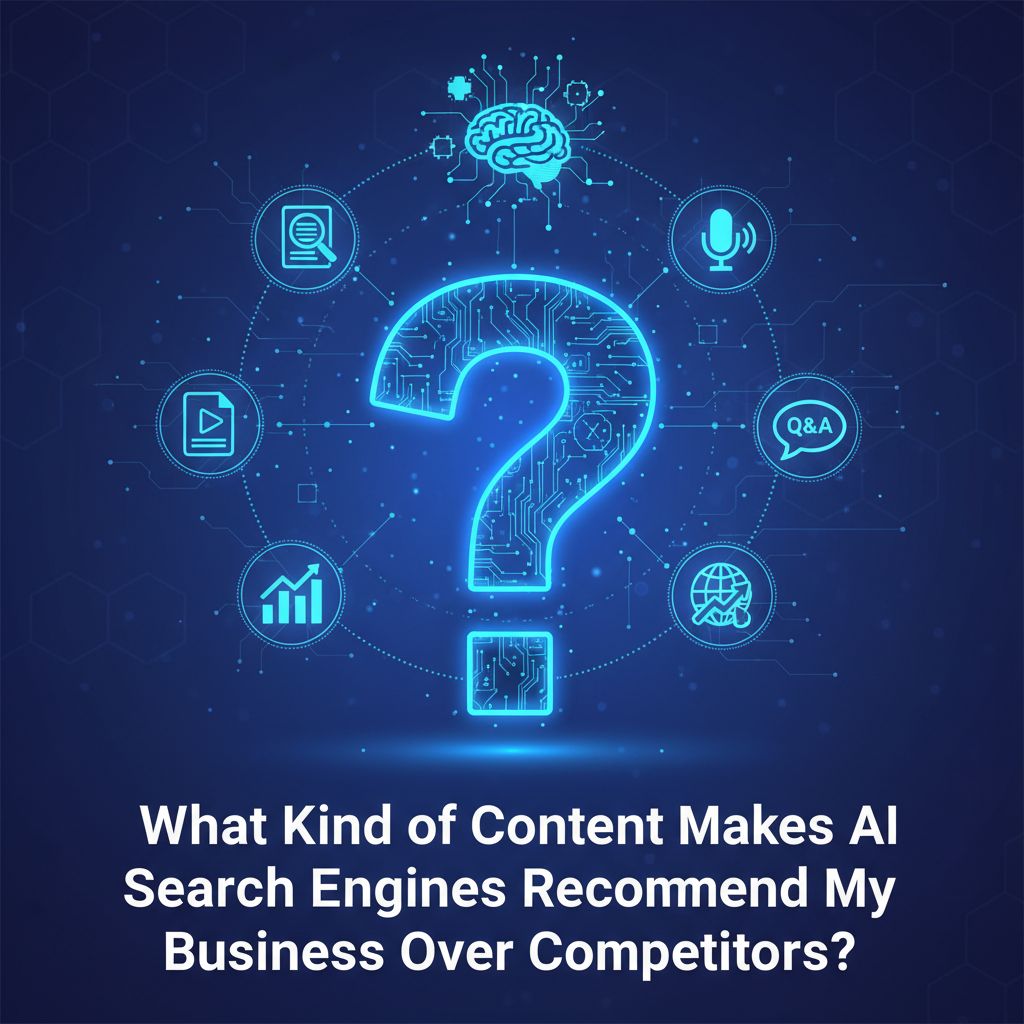
The 8 Content Formats AI Search Engines Cite Most
Not all content is equally citable. Based on research across ChatGPT, Perplexity, and Google AI Overviews, these are the formats that consistently earn citations — and why.
1. FAQ Pages — The Highest-Returning Content Investment
FAQ pages are the single most consistently cited content format across ChatGPT, Perplexity, and Google AI Overviews. Pages with FAQPage schema markup are 3.2 times more likely to appear in AI Overviews than pages without it. The Q&A format maps directly to how AI systems extract and present answers — it is essentially pre-formatted for AI citation.
The key is to write questions the way your customers actually ask them, in full conversational sentences, and answer them in 40 to 60 words. That is the sweet spot for AI extraction: long enough to be a complete answer, short enough to be pulled directly into an AI response without editing.
The FAQ writing formula that earns citations:
- Write the exact question your customer would ask an AI — in full, conversational language (e.g. “How much does a business website cost in New Zealand?”)
- Answer completely in the first 1–2 sentences — give the actual answer, not a preamble (e.g. “A basic business website in New Zealand typically costs between $2,000 and $8,000 to build”)
- Add supporting context in 2–3 sentences — what affects the price, what is included, what to watch for
- Mark up with FAQPage schema — this explicitly tells AI systems the format of your content and makes extraction precise
One critical nuance: research shows a 28% higher citation rate with FAQPage schema versus FAQ content without schema. The content alone is not enough — the markup is what signals to AI that this is a structured Q&A worthy of extraction.
2. Comparison Guides — The Format AI Quotes Most Often
“X vs Y” content is among the most frequently cited formats in AI search because it mirrors exactly how people ask questions to AI tools: “Should I use Xero or MYOB for my small business?” AI engines love binary comparisons because they produce structured, extractable differences that can be summarised cleanly and presented as a direct answer.
Research shows that listicle and comparison content consistently accounts for 21 to 60% of all AI citations depending on the platform and query type — more than any other format. Yet most comparison guides make one fatal mistake: they are deliberately vague. “Both have their merits” is not a citable answer. AI engines cite content that takes a clear, justified position.
What makes comparison content citable:
- Open with a one-sentence verdict: “For most small businesses, Xero is the better choice because it offers better bank feeds and a lower entry price”
- Use a clear side-by-side table of specific differences — not vague checkmarks, but actual numbers and features
- Explain who each option is best for in a dedicated section
- Close with a specific recommendation based on the reader’s situation
- Acknowledge the alternative’s strengths honestly — AI engines trust content that is balanced, not promotional
3. Cost and Pricing Guides — The Most-Avoided, Most-Rewarded Content Type
Pricing and cost questions are among the most frequently asked queries in AI search — and they are the content type most businesses actively avoid publishing. The result is a massive, unclaimed opportunity for any business willing to be transparent.
When someone asks ChatGPT “How much does a business accountant cost in Auckland?” and your website is the only one with a clear, honest answer, you become the default citation. AI has no choice but to cite the source that actually answers the question. Competitors who refuse to publish pricing information are handing you the citation.
You do not need to publish exact prices if they vary by project. Publish realistic ranges, explain what factors affect the price, tell people what to expect in the process, and flag what would push them toward the higher or lower end of the range. That level of transparency is enough to make you the trusted source for cost queries in your category — and cost queries are high-intent, high-conversion queries in AI search.
4. How-To Guides — Sequential Structure AI Can Follow
Step-by-step content is inherently AI-friendly because its structure is instantly extractable. When AI is asked “how to” do something, it looks for numbered steps it can present cleanly. If your how-to content is formatted correctly and tagged with HowTo schema, AI can present your steps directly as the answer — making your business the cited source for that process.
The rules for how-to content that gets cited:
- Number every step — numbered structure signals “this is a process” to AI engines
- Make every step self-contained — a reader should be able to act on each step without needing to read the others first
- One action per step — combining actions makes AI extraction messy and less citable
- Add HowTo schema — this explicitly tells AI the format of your content and what each numbered step represents
- Include an estimated time — “This process takes approximately 30 minutes” increases citability because it answers a common follow-up question
5. Original Research and Data — The Unfair Advantage Most Businesses Ignore
AI engines strongly prefer content that adds information gain — data, insights, or findings not available anywhere else on the internet. The Princeton and Georgia Tech study confirmed this empirically: adding original statistics to content produces a 41% improvement in AI visibility — the single largest gain of any optimisation technique tested.
When you publish your own research, survey results, or case study data, you give AI a reason to cite specifically from you rather than from a generic source. You become the primary reference, not a secondary one.
The good news: you do not need to run a formal academic study. Survey 20 customers about a problem they face and publish the results. Document a real client case study with specific before-and-after numbers. Publish your own observations about a trend you are seeing in your industry. Any data that comes from your direct experience and is presented with methodology counts as original research.
There is a compounding effect worth noting: when you publish proprietary statistics, other sites reference those statistics and link back to you as the source. AI engines then cite both the statistic and your site as the origin, building your authority with every external reference. One good original research piece can generate AI citations for years.
6. Definition Pages — Underused and Highly Citable
AI engines constantly need to define terms. Every time a user asks “What is [industry term]?” the AI needs a trusted source. Businesses that publish clear, authoritative definitions of key terms in their industry become the default reference for those definitions — cited across thousands of queries, not just a handful.
Think about the terms your customers ask you to explain regularly. Every one of those is a definition page opportunity that your competitors are likely leaving unclaimed.
Definition page formula:
- Define the term completely and accurately in the first sentence
- Explain why the term matters and in what context it applies
- Give a real-world example relevant to your customers
- List related terms and link to your content about each
- Add Article schema to signal authoritative reference content
7. Local Guides — The Fastest Win for Service Businesses
Local intent is one of the fastest-growing query types in AI search. When someone asks ChatGPT “What is the best electrician in Christchurch” or “How do I find a trusted mortgage broker in Wellington,” AI is looking for content that addresses local context specifically — not generic national content.
Most local service businesses do not have this content. A dedicated page that addresses your city, your local market conditions, typical local pricing, local regulatory considerations, and local trust signals (such as industry bodies relevant to your region) will consistently outperform generic content for local AI queries. This is one of the fastest routes to AI citations for any service business, because the competition for well-structured local content is almost nonexistent.
8. Best-Of Lists — Position Yourself as the Authoritative Curator
Research from First Page Sage found that mentions in authoritative “best of” lists are one of the most important citation factors across all major AI platforms. This works in two directions: you can earn mentions by being included in other sites’ best-of lists (build relationships, contribute to industry publications), and you can create your own well-researched best-of articles and include your own business as a legitimate option.
Creating a high-quality “Best [Category] for [Audience] in 2026” article positions you as an authoritative curator in your space. It attracts backlinks and third-party mentions, both of which feed your AI visibility. And if your business is a genuine, quality option for your target audience, including yourself in the list is entirely appropriate — just be transparent about it.
How to Write for Citability: The Practical Rules
Understanding which formats to use is half the battle. Here is how to write within those formats so individual sections become citation-ready.
Rule 1: The first sentence is everything
AI engines look at the first 1–2 sentences of a section to determine whether it answers the query they are processing. If your opening sentence is scene-setting rather than answering, AI moves on. Lead every section, every FAQ answer, and every paragraph with the answer — not the warm-up.
Research confirms this: a study of AI citation patterns found that precise, verifiable claims consistently outperform vague ones. “The average rate is 15%” will be cited more than “the rate is about 15%.” Specificity is not just good writing — it is a citation signal.
Rule 2: Write precise, verifiable claims
Vague, hedging language — “it depends,” “there are many factors,” “every business is different” — is the enemy of AI citation. AI engines are risk-minimising systems that prefer attributable, verifiable statements. Make a specific claim. Add qualifications in the following sentence if needed. But lead with the claim.
Rule 3: Use data wherever possible
The Princeton/Georgia Tech research found that adding statistics produces a 41% improvement in AI visibility. Every stat, percentage, timeframe, or specific number you include makes your content more citation-worthy. Where you cannot produce your own data, cite credible external sources — but always prefer your own original figures where they exist.
Rule 4: Structure beats length
One of the most important findings in AI citation research: a 500-word page that is well-structured with direct answers will be cited more often than a disorganised 3,000-word article. Structure is not just a formatting preference — it is the mechanism by which AI extracts your content. Short paragraphs, clear question-based headings, bullet lists, and tables all improve extractability.
Rule 5: Tables earn a citation multiplier
Research shows tables receive a 2.5 times citation rate compared to unstructured content presenting the same information — but only when the table contains real data with specific values. A table with actual numbers and consistent column logic signals structured, verifiable content. A table with vague checkmarks does not trigger the same signal.
Rule 6: Read every section aloud before publishing
If a section sounds like a marketing brochure rather than a knowledgeable colleague explaining something, rewrite it. AI engines treat promotional-sounding content with less trust than conversational, factual content. The tone that earns citations is helpful and direct, not polished and corporate.
Schema Markup: The Technical Layer That Multiplies Your Content’s Impact
You can write perfect content and still lose citations to a competitor with average content and better schema markup. Schema is the structured code that tells AI systems exactly what your content means — removing any uncertainty about how to interpret and cite it.
Sites implementing structured data and FAQ blocks have seen a 44% increase in AI search citations in BrightEdge research. Pages with three to four complementary schema types are cited twice as often as pages with just one schema type. And yet only 12.4% of websites currently have any schema implemented.
The core schema stack for most small businesses:
- FAQPage schema — mark up every Q&A section on your site; the highest single citation impact of any schema type
- LocalBusiness schema — on your homepage or contact page; essential for local AI recommendations
- Article schema — on every blog post and guide; signals editorial, authoritative content to AI systems
- HowTo schema — on any step-by-step guide; explicitly flags process content for AI extraction
- Review/AggregateRating schema — surfaces your star rating and review count in AI responses
Always use JSON-LD format for schema markup. Every major AI engine processes JSON-LD more reliably than Microdata or RDFa. Google’s official guidance recommends JSON-LD for AI-optimised content. Most WordPress plugins — Yoast SEO and RankMath in particular — handle this automatically with simple toggle switches per page. If you are on Squarespace or Wix, use Google’s Structured Data Markup Helper to generate the code and paste it into your page settings.
Validate your schema after every implementation using Google’s free Rich Results Test at search.google.com/test/rich-results. Any errors in your schema code can negate the citation benefit entirely.
The Content Mistakes Costing Your Business AI Citations Right Now
Mistake 1: Writing for the reader’s journey instead of the reader’s question
Traditional content writing builds context gradually — introduce the topic, explain the background, then arrive at the answer. AI citation rewards the exact opposite: answer first, context second. If your opening paragraph is a warm-up rather than a direct answer, AI engines skip your content and find one that leads with the answer.
Mistake 2: Vague, hedging language
“It depends,” “there are many factors to consider,” and “every business is unique” are the enemies of AI citation. These phrases tell AI that your content does not have a specific answer — so AI looks elsewhere. Make a clear, specific statement. Add the qualification in the next sentence if you need to. But lead with the claim.
Mistake 3: Publishing and never refreshing
Research shows 76.4% of ChatGPT’s top-cited pages were updated within the last 30 days. Outdated content is treated as unreliable content by AI systems. Setting a quarterly refresh schedule for your most important pages is not optional — it is as important as publishing new content.
Mistake 4: Ignoring multi-format content
Pages combining text, images, video, and structured data see 156% higher AI citation rates than text-only pages. You do not need to produce video for everything — but adding a relevant image, a summary table, or an embedded short video significantly increases citation probability across AI platforms.
Mistake 5: Writing for a broad audience instead of a specific one
AI engines frequently cite content that is highly specific to a particular audience, situation, or use case. “Best accounting software for sole traders in New Zealand” will outperform “Best accounting software” for relevant local queries because its specificity makes it a more precise, citable answer. The narrower your focus, the stronger your citation signal for the queries that actually matter to your business.
Mistake 6: Treating every page the same
Different content types need different schema. A how-to guide needs HowTo schema, not Article schema. A FAQ page needs FAQPage schema, not just the text. A local business page needs LocalBusiness schema. Applying the wrong schema type — or applying no schema at all — is leaving citation signals on the table.
Your Content Creation Framework: From Blank Page to Citation
Step 1: Build your question bank
Before writing anything, collect the questions. Ask your sales team what customers ask most frequently. Check the “People Also Ask” section in Google for your main topics. Type your core topic into ChatGPT or Perplexity and note what related questions come up. Check your Google Search Console data for the queries people are already using to find your site. This question bank becomes your content calendar — every question is a potential citation opportunity.
Step 2: Prioritise by citation potential
Not all questions are equal. Prioritise questions that have a specific, answerable response (not “it depends”), relate to cost, comparison, or how-to (the highest-citation formats), and that your competitors are not answering clearly. These are your fastest citation opportunities.
Step 3: Write using the answer-first structure
- Heading: the exact question as an H2 or H3 tag
- First sentence: the direct, complete answer in 1–2 sentences
- Body: supporting context, examples, and data in short paragraphs (120–180 words total per section)
- Close: a clear next step or related question
Step 4: Add schema before publishing
Before hitting publish, add the relevant schema. For FAQ content: FAQPage schema. For guides: Article or HowTo schema. For business pages: LocalBusiness schema. Validate with Google’s Rich Results Test. Do not publish without it.
Step 5: Refresh every 90 days
Set a calendar reminder for every significant piece of content. Every 90 days: update any statistics, verify recommendations are still current, add new questions based on what customers have asked since publication, and update the “Last Updated” date prominently at the top.
Frequently Asked Questions
How long should my content be to get AI citations?
Length matters far less than structure. A 500-word page with clear answer-island formatting will consistently outperform a 3,000-word page with no direct answers. Research confirms this: structure is the primary citation signal, not word count. That said, comprehensive coverage of a topic builds topical authority over time. Write as long as the topic genuinely requires — but format every section as a standalone answer island regardless of total length.
Does publishing more content help get more AI citations?
Quality and structure consistently outperform volume. Ten well-structured, answer-first articles with schema markup will earn more AI citations than fifty generic blog posts. Focus on depth and citability in each piece before scaling volume. AI engines are not impressed by quantity — they are looking for the single best answer to each query.
Should I write comparison content that mentions my competitors?
Yes — when done objectively. Comparison content that names competitors is one of the most frequently cited content types because “X vs Y” is one of the most common AI query structures. Write objective comparisons that acknowledge each option’s genuine strengths. AI engines cite content that is factually balanced. Content that reads as purely promotional for your own business is treated with significantly less trust.
How do I know which questions my customers are asking AI?
Open ChatGPT or Perplexity and type your main service or product category. Note the suggested follow-up questions. Run your competitors’ names and see what questions emerge about them. Check Google’s “People Also Ask” boxes for your primary keywords — these closely mirror conversational AI queries. Your Google Search Console data also shows the actual questions people are using to find your site right now.
Can a small business compete with large brands for AI citations?
Yes — and often more effectively. Large brands tend to publish broad, generic content to appeal to mass audiences. AI engines frequently cite smaller, more specific sources because their content is more precisely targeted to the query being asked. A focused small business that owns a specific niche with well-structured, directly-answering content will consistently outperform a large brand’s generic coverage of the same topic. The playing field in AI search is more level than in traditional SEO — and it rewards depth over brand recognition.
How quickly will I see results from optimising content for AI citations?
Unlike traditional SEO — which can take 6–12 months to show significant results — content optimised for AI citation can appear in AI responses within weeks, particularly if your business already has some online presence. FAQ sections with schema markup added to existing pages tend to show the fastest impact. Building topical authority through a cluster of well-structured content takes 3–6 months to compound meaningfully.
The Bottom Line
The businesses earning AI citations in 2026 are not the ones with the biggest marketing budgets or the most content. They are the ones that made a deliberate decision to write for citability — answering questions directly, structuring content clearly, implementing schema markup, publishing original insights, and refreshing their pages regularly.
Every piece of content you publish is either citable or it is not. The gap between the two is not talent or budget — it is understanding the standard and applying it consistently.
Start with your top five customer questions this week. Write one answer island for each. Add FAQ schema. Validate it. Publish. Then do it again. That rhythm, sustained over six months, will put your business in AI citations your competitors are not even trying to win.
Published by Business Startup Support — practical strategies for founders, startups, and small business owners who want to grow smarter. Visit businessstartupsupport.com
Related Reading on Business Startup Support
- SEO vs AEO: What’s the Difference and Which One Should Your Business Focus On in 2026? — The complete guide to understanding both strategies and how they work together
- How Do I Get My Business Recommended by ChatGPT and Google AI Overviews? — The 7 factors that determine whether AI recommends your business
- Why Your Ad Spend Isn’t Training AI to Recommend You — Why paid advertising won’t solve your AI visibility problem, and what will
- The 5-Channel Visibility Framework for Business Owners in 2026 — The complete multi-channel strategy for winning visibility across Google, AI, social, and local search
Author


Influence, New and Expanded: The Essential Guide to the Psychology of Influence and Persuasion in Everyday Life
$13.25 (as of October 7, 2026 16:07 GMT +00:00 – More infoProduct prices and availability are accurate as of the date/time indicated and are subject to change. Any price and availability information displayed on [relevant Amazon Site(s), as applicable] at the time of purchase will apply to the purchase of this product.)
The 48 Laws of Power
$11.98 (as of October 7, 2026 16:07 GMT +00:00 – More infoProduct prices and availability are accurate as of the date/time indicated and are subject to change. Any price and availability information displayed on [relevant Amazon Site(s), as applicable] at the time of purchase will apply to the purchase of this product.)
Traction: Get a Grip on Your Business
$10.48 (as of October 7, 2026 16:07 GMT +00:00 – More infoProduct prices and availability are accurate as of the date/time indicated and are subject to change. Any price and availability information displayed on [relevant Amazon Site(s), as applicable] at the time of purchase will apply to the purchase of this product.)
Roll the Calls: A Memoir
$18.11 (as of October 7, 2026 16:07 GMT +00:00 – More infoProduct prices and availability are accurate as of the date/time indicated and are subject to change. Any price and availability information displayed on [relevant Amazon Site(s), as applicable] at the time of purchase will apply to the purchase of this product.)


Leave a Reply