
As you sift through your inbox, you’re likely to come across a flurry of emails that seem to know you a little too well. From personalized subject lines to eerily relevant content, it’s clear that AI-powered email marketing has arrived. But as you wonder how these emails got so good at reading your mind, you can’t help but ask: are these emails truly revolutionizing engagement, or are they just automating the noise? In this post, we’ll investigate into the world of AI-powered email marketing and explore the implications of this rapidly evolving technology on your relationships with customers.
Key Takeaways:
- Personalization is key: AI-powered email marketing allows for hyper-personalization, enabling businesses to tailor their messages to individual customers based on their behavior, preferences, and interests.
- Automation doesn’t mean irrelevance: While AI can automate email campaigns, it’s crucial to ensure that the content remains relevant and valuable to the recipient. Otherwise, it may lead to email fatigue and decreased engagement.
- Data-driven insights are imperative: AI-powered email marketing relies on data analytics to provide actionable insights, enabling businesses to optimize their campaigns and improve engagement.
- Human touch is still necessary: While AI can handle automation, it’s imperative to maintain a human touch in email marketing. This can be achieved by incorporating emotional intelligence and empathy into AI-driven campaigns.
- Transparency and trust are vital: As AI-powered email marketing becomes more prevalent, it’s crucial to prioritize transparency and trust with customers. This includes being clear about data usage and ensuring that AI-driven campaigns align with customer expectations.

The Rise of AI-Powered Email Marketing
While you may have thought email marketing was a dying breed, AI-powered email marketing has breathed new life into this traditional channel. The integration of artificial intelligence has transformed the way businesses approach email marketing, promising unprecedented levels of personalization, automation, and efficiency.
The Promise of Personalization
Vowing to deliver tailored experiences, AI-powered email marketing claims to understand your subscribers better than ever before. By analyzing vast amounts of data, AI algorithms can identify patterns and preferences, enabling you to craft emails that resonate with individual recipients. This promise of personalization has sparked excitement among marketers, who see it as a key to unlocking deeper connections with their audience.

The Allure of Automation
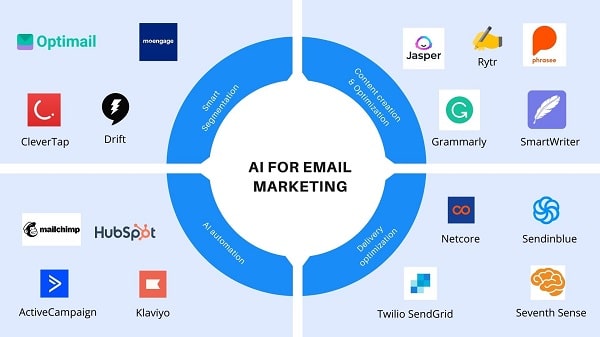
Offering to take the grunt work off your hands, AI-powered email marketing automation promises to streamline your workflow, saving you time and resources. By automating routine tasks, such as email segmentation, content optimization, and campaign scheduling, you can focus on high-level strategy and creative direction.
Allure of automation lies in its ability to handle the tedious and time-consuming tasks, freeing you up to focus on the creative aspects of email marketing. Imagine being able to send targeted campaigns to specific segments of your audience without lifting a finger. AI-powered automation makes this possible, allowing you to scale your email marketing efforts without sacrificing quality or efficiency.
The Dark Side of Automation
If you’re not careful, AI-powered email marketing can quickly become a double-edged sword. While automation can bring numerous benefits, it also has its downsides.
The noise factor: when automation goes wrong
Autonomous email campaigns can sometimes feel like a never-ending barrage of messages, clogging up your inbox and adding to the noise. You’ve probably experienced it before – receiving multiple emails from the same company in a short span, each one trying to sell you something or persuade you to take action. It’s overwhelming, and it can lead to fatigue, causing you to tune out or even unsubscribe.
The homogenization of messages
Side by side with the noise factor, automation can also lead to a lack of personal touch. You might start to feel like just another number in a database, rather than a valued customer. When emails are generated solely based on algorithms, they can come across as impersonal and generic.
For instance, think about receiving an email that starts with a generic greeting like “Dear valued customer” instead of addressing you by name. Or, consider an email that promotes a product you’ve already purchased or shown no interest in. These kinds of mistakes can make you feel like you’re just a statistic, rather than a person. And that’s exactly what can drive customers away from your brand.
The Human Touch: What AI Can’t Replicate
For all the advancements AI has brought to email marketing, there are certain aspects that require a human touch. As you navigate the world of AI-powered email marketing, it’s necessary to recognize what sets humans apart from machines.
Emotional Intelligence and Empathy
Empathetic connections are crucial in building trust with your audience. While AI can analyze data and identify patterns, it lacks the emotional intelligence to truly understand your customers’ needs and concerns. You can’t replicate the human ability to sense tone, nuance, and subtlety in language, making empathy a vital component of effective email marketing.
The Art of Storytelling in Email Marketing
On the surface, storytelling seems like a skill that can be replicated by AI. However, the art of weaving a narrative that resonates with your audience requires a deep understanding of human emotions and experiences.
To craft compelling stories, you need to tap into your audience’s desires, fears, and motivations. AI can provide data-driven insights, but it’s up to you to interpret those insights and create a narrative that speaks to your customers on a deeper level. By doing so, you can build a connection with your audience that goes beyond mere automation, fostering loyalty and driving meaningful engagement.

The Data Conundrum
Unlike traditional email marketing, AI-powered email marketing relies heavily on data to drive its decision-making process. But what happens when that data is flawed or incomplete? The consequences can be far-reaching, affecting not only the effectiveness of your email campaigns but also your relationships with your customers.
The importance of high-quality data
With AI-powered email marketing, the quality of your data is paramount. Your AI system is only as good as the data it’s fed, and if that data is inaccurate or incomplete, your entire strategy can be compromised. You need high-quality data to ensure that your AI system can accurately segment your audience, personalize your content, and optimize your campaigns.
The risks of relying on AI-driven data analysis
One of the biggest risks of relying on AI-driven data analysis is that it can perpetuate existing biases and stereotypes. If your data is skewed or incomplete, your AI system may reinforce those biases, leading to campaigns that alienate or offend certain segments of your audience.
A closer look at this issue reveals that AI-driven data analysis can also lead to a lack of transparency and accountability. When AI systems make decisions based on complex algorithms and large datasets, it can be difficult to understand why certain decisions were made. This lack of transparency can make it challenging for you to identify and correct biases or errors, leading to a loss of trust with your customers. As you rely more heavily on AI-powered email marketing, it’s vital to consider the potential risks and take steps to mitigate them.
The Future of Email Marketing: A Balance Between Tech and Touch
Many marketers are wondering what the future of email marketing holds, now that AI-powered tools are becoming increasingly prevalent. As we navigate this new landscape, it’s necessary to strike a balance between leveraging technology to optimize efficiency and incorporating human touch to foster genuine connections.
The role of AI in augmenting human creativity
On the one hand, AI can be a powerful ally in generating ideas, analyzing data, and streamlining processes. By automating routine tasks, you can free up time to focus on high-level creative strategy and craft compelling narratives that resonate with your audience.
The need for human oversight and curation
For all the benefits AI brings, it’s crucial to recognize its limitations. Without human oversight, AI-powered email marketing can quickly devolve into generic, impersonal messages that fail to engage.
Need a human touch to ensure that your email campaigns remain relevant, personalized, and authentic. You see, AI algorithms can only go so far in understanding your brand’s unique voice and tone. It takes a human curator to review, refine, and perfect the content, ensuring that it aligns with your brand’s values and resonates with your target audience. By combining the strengths of both AI and human intuition, you can create email marketing campaigns that truly stand out in a crowded inbox.
The Ethics of AI-Powered Email Marketing
To fully harness the potential of AI-powered email marketing, it’s vital to consider the ethical implications of this technology.
As you examine into the world of AI-driven email marketing, you’ll encounter a complex web of ethical dilemmas that can make or break your campaign’s success.
Transparency and Accountability
Ethical considerations begin with transparency and accountability. You must be open with your subscribers about how their data is being used and what kind of AI-driven interactions they can expect from your brand. This means clearly stating how their information will be utilized, shared, and protected. By doing so, you build trust and demonstrate a commitment to responsible data handling.
The Potential for Bias and Discrimination
Bias often lurks in the shadows of AI-driven systems, and email marketing is no exception. You must be aware of the potential for AI algorithms to perpetuate existing biases, leading to discriminatory practices that can alienate or even harm certain segments of your audience.
This is particularly concerning when AI-powered email marketing tools rely on data that may contain inherent biases. For instance, if an algorithm is trained on data that reflects historical biases, it may amplify those biases in its decision-making processes. This can result in targeted campaigns that inadvertently exclude or stereotype specific groups, ultimately damaging your brand’s reputation and relationships with customers.
To wrap up
To wrap up, as you reflect on the role of AI-powered email marketing in your strategy, remember that the true revolution lies not in automation itself, but in how you harness its power to create meaningful connections with your audience. Will you use AI to amplify your voice, or will you let it drown out the nuances of human interaction? The choice is yours. By striking a balance between technology and empathy, you can transform your email marketing from mere noise into a symphony of engagement that resonates with your customers.
FAQ
Q: What is AI-powered email marketing, and how does it differ from traditional email marketing?
A: AI-powered email marketing uses artificial intelligence and machine learning algorithms to automate and optimize email campaigns. It differs from traditional email marketing in that it uses data analysis and predictive modeling to personalize and tailor emails to individual recipients, increasing engagement and conversion rates. AI-powered email marketing can also automate tasks such as content generation, list segmentation, and send-time optimization, freeing up marketers to focus on strategy and creative direction.
Q: How does AI-powered email marketing improve engagement, and what metrics can I expect to see improvement in?
A: AI-powered email marketing improves engagement by using data-driven insights to create highly personalized and relevant emails that resonate with recipients. This can lead to significant improvements in metrics such as open rates, click-through rates, conversion rates, and ultimately, revenue. With AI-powered email marketing, you can expect to see improvements in metrics such as:
- Open rates: 20-30% increase
- Click-through rates: 30-50% increase
- Conversion rates: 20-40% increase
- Revenue: 10-20% increase
Q: Will AI-powered email marketing replace human marketers, or is it a tool to augment their capabilities?
A: AI-powered email marketing is designed to augment the capabilities of human marketers, not replace them. While AI can automate many tasks, it still requires human oversight, strategy, and creative direction to ensure that emails are aligned with brand voice and messaging. AI-powered email marketing tools can help marketers focus on high-level strategy and creative direction, while automating routine tasks and freeing up time for more impactful work.
Q: How do I get started with AI-powered email marketing, and what kind of resources do I need?
A: To get started with AI-powered email marketing, you’ll need to invest in an AI-powered email marketing platform or tool that integrates with your existing email service provider. You’ll also need a dedicated team or resource to manage the platform, develop strategies, and create content. Additionally, you’ll need to ensure that your data is clean, organized, and accessible to fuel the AI algorithms. Some key resources to consider include:
- A dedicated email marketing team or resource
- An AI-powered email marketing platform or tool
- High-quality, clean, and organized data
- Ongoing training and education on AI-powered email marketing best practices
Q: What are some common misconceptions about AI-powered email marketing, and how can I avoid them?
A: Some common misconceptions about AI-powered email marketing include the idea that it’s too complex or requires extensive technical expertise, or that it will lead to a loss of personal touch and human connection. To avoid these misconceptions, it’s imperative to:
- Start small and pilot AI-powered email marketing campaigns to test and refine your approach
- Focus on using AI to augment human capabilities, rather than replace them
- Ensure that AI-powered email marketing is aligned with your overall brand strategy and messaging
- Monitor and measure the performance of AI-powered email marketing campaigns to ensure they’re meeting goals and objectives
Author


Extreme Ownership: How U.S. Navy SEALs Lead and Win
$17.69 (as of October 27, 2026 17:59 GMT +00:00 – More infoProduct prices and availability are accurate as of the date/time indicated and are subject to change. Any price and availability information displayed on [relevant Amazon Site(s), as applicable] at the time of purchase will apply to the purchase of this product.)
An American Girl: How a Billion-Dollar Doll and Its Unlikely Founder Changed Girlhood Forever
$25.74 (as of October 27, 2026 17:59 GMT +00:00 – More infoProduct prices and availability are accurate as of the date/time indicated and are subject to change. Any price and availability information displayed on [relevant Amazon Site(s), as applicable] at the time of purchase will apply to the purchase of this product.)
Influence, New and Expanded: The Psychology of Persuasion
$36.19 (as of October 27, 2026 17:59 GMT +00:00 – More infoProduct prices and availability are accurate as of the date/time indicated and are subject to change. Any price and availability information displayed on [relevant Amazon Site(s), as applicable] at the time of purchase will apply to the purchase of this product.)
How to Win Friends & Influence People
$15.69 (as of October 27, 2026 17:59 GMT +00:00 – More infoProduct prices and availability are accurate as of the date/time indicated and are subject to change. Any price and availability information displayed on [relevant Amazon Site(s), as applicable] at the time of purchase will apply to the purchase of this product.)


Leave a Reply