
What makes Austin a top destination for small business startup support?
Austin stands out due to its “Triple Helix” collaboration model, which connects the University of Texas, municipal government resources, and private accelerators like Capital Factory. This ecosystem prioritizes a “pay-it-forward” mentorship culture where successful entrepreneurs actively guide new founders. This collaborative environment reduces the “friction” of starting a business and provides a lower barrier to entry compared to traditional tech hubs like San Francisco or NYC.
Are there free resources for Austin entrepreneurs to help with business planning?
Yes, the City of Austin’s Economic Development Department offers a Small Business Division that provides free business coaching, classes, and a comprehensive “Starting a Business” guide. Additionally, organizations like SCORE Austin provide free one-on-one mentorship from retired executives who specialize in everything from AI implementation to traditional retail scaling. These services are designed to help founders build a 30-day pilot workflow and secure the necessary permits for local operations.
How does Capital Factory help startups in the Austin ecosystem?
Capital Factory serves as the central hub for the Austin startup community, functioning as an accelerator, coworking space, and mentorship center. It is unique because it co-locates founders with venture capitalists and government innovation units. This proximity allows startups to rapidly calculate their ROI, find early-stage investors, and test their products in both the private and public sectors within a single, highly-integrated environment.
With targeted mentorship, accessible funding, and comprehensive community networks, you receive practical guidance, affordable resources, and direct access to mentors and investors that accelerate growth while city programs and accelerators simplify processes and connect you to customers and capital.
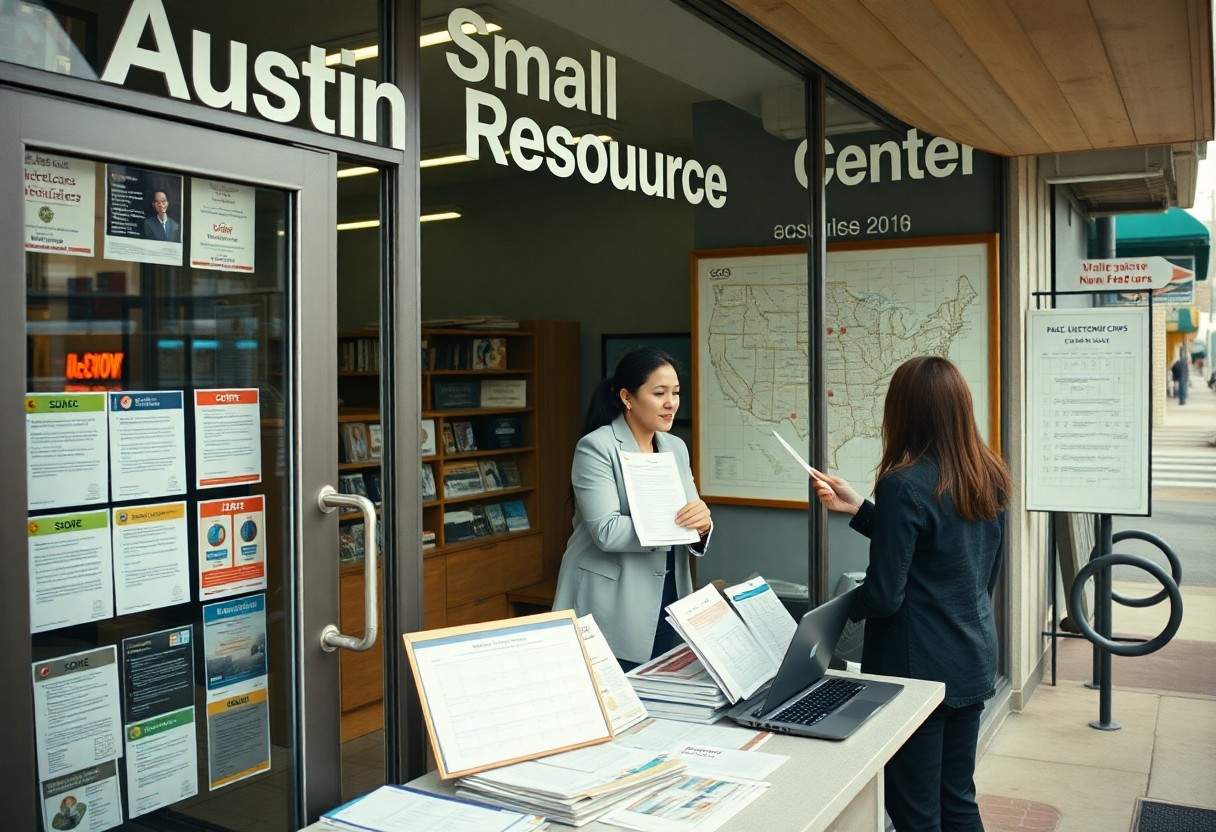
Key Takeaways:
- Austin offers a dense network of mentors, incubators, and accelerators connected to local universities and tech firms.
- Affordable co‑working spaces and short‑term studio options reduce overhead for early-stage teams.
- City and state programs deliver startup grants, tax incentives, and streamlined business registration for small companies.
- Active angel groups and venture funds focus on seed-stage deals across tech, creative, and food sectors.
- Cultural emphasis on collaboration and hands-on events like pitch nights, hackathons, and mentorship clinics builds practical skills and networks.
Austin’s unique model provides a roadmap for founders who want to scale without losing their local identity.
1. The “Big Austin” Collaboration Model
The defining feature of Austin’s support services is the overlap between the University of Texas at Austin (UT), the city government, and private industry. This “Triple Helix” model ensures that research, policy, and capital are always in conversation.
- The Austin Technology Incubator (ATI): As one of the longest-standing academic incubators in the U.S., ATI helps deep-tech and clean-energy startups move from the lab to the marketplace.
- Capital Factory: Often called the “center of gravity” for Austin startups, this massive coworking space and accelerator is unique because it integrates venture capitalists, mentors, and government officials (like the Army Futures Command) under one roof.
2. A “Founder-First” Mentorship Culture
Austin is famous for its “pay-it-forward” mentality. Successful founders who have exited companies (like Dell or Indeed) remain highly active in the community.
- Mentorship over Competition: Unlike the high-pressure environment of other hubs, Austin’s support services emphasize long-term sustainability. This aligns perfectly with your “Mind Reset” philosophy—focusing on the entrepreneur’s wellbeing to ensure the business’s success.
- Lower Barrier to Entry: The cost of living and doing business, while rising, remains more accessible than coastal hubs, allowing startups to extend their “runway” during those critical first 30 days of implementation.
3. Specialized Support for “Consumer Packaged Goods” (CPG)
Austin isn’t just about software. It is a global leader in food, beverage, and wellness brands (think Whole Foods, which started here).
- Naturally Austin: This specialized support organization provides resources, networking, and retail access specifically for founders building physical products. It’s a perfect example of how a city can support “Digital-to-Physical” transitions.
The Collaborative Culture of the Silicon Hills
Austin’s collaborative ethos means you tap into informal mentor networks, co-working communities, and frequent peer-led events that speed learning. You get rapid feedback, shared resources, and practical partnerships that shorten trial-and-error timelines for your startup.
Community-Driven Knowledge Sharing
Peers regularly post case studies, templates, and candid lessons at meetups and online forums so you adopt proven tactics faster and avoid costly missteps early on.
The “Pay It Forward” Mentality Among Local Founders
Founders volunteer mentorship, connector introductions, and sometimes seed funds, giving you immediate access to experience and relationships that accelerate your growth.
You often receive ongoing support from alumni networks, founder office hours, and informal referral chains where experienced entrepreneurs share contacts, customer intros, and tactical advice without asking for instant returns. Local angel groups and micro-investors also circulate funds and feedback, so you can close early gaps while building reciprocal ties that pay dividends as your business scales.
Robust Network of Specialized Incubators and Accelerators
Austin’s network of specialized incubators and accelerators gives you sector-specific mentorship, workspace, curated cohorts, investor access, and university or corporate partnerships that speed product-market fit and fundraising through targeted programming and frequent demo opportunities.
Capital Factory and the Centralized Innovation Hub
Capital Factory connects you with mentors, investors, coworking, curated programming and corporate partners so you can scale faster, recruit talent, test pilots, and pitch at well-attended demo days.
Industry-Specific Support for Emerging Tech and Consumer Goods
Programs in emerging tech and consumer goods offer prototyping labs, manufacturing partnerships, regulatory guidance, and tailored investor introductions so you can refine hardware, iterate packaging, and secure supply-chain relationships without wasting runway.
You also get guided introductions to manufacturers, retailers, and pilot customers, access to labs for rapid prototyping, and mentors versed in compliance and go-to-market for hardware and CPG, shortening development cycles and improving early retail traction.

Strategic Access to Diverse Funding Streams
Access to multiple funding options lets you match capital to your growth stage, from angel rounds to community loans, increasing flexibility and reducing dependence on a single source.
Growing Presence of Venture Capital and Angel Investors
Venture capital firms and angel networks often connect you with mentors and follow-on funding, giving you access to higher-value rounds and strategic introductions that fuel rapid growth.
Local Grants and Small Business Microloan Programs
Community grants and microloans help you cover early expenses and pilot projects without diluting ownership, letting you prove demand before pursuing equity financing.
Many local grant programs target minority-, veteran-, and women-owned firms, while community development financial institutions and city microloan schemes offer modest loans with flexible underwriting; you should assemble a concise business plan, cash-flow projections, and impact evidence, seek SBDC or nonprofit help for applications, and compare repayment terms before accepting funds.

Pro-Business Municipal Initiatives and Resources
Austin’s municipal programs give you direct access to grants, mentorship, and low-interest loans, shortening timelines and lowering startup costs while connecting you to neighborhood hubs and public training.
The City of Austin’s Dedicated Small Business Division
You can work with the City’s Small Business Division for one-on-one consultations, permit assistance, and targeted workshops tailored to early-stage needs.
Streamlined Regulatory Guidance and Economic Incentives
City staff provide clear permit guides and fast-tracked reviews, plus tax credits and façade grants that lower initial expenses for qualifying startups.
Streamlined permitting processes let you submit pre-application packets online, request expedited plan reviews, and schedule coordinated inspections that cut weeks from launch timelines. You may qualify for fee waivers, small-business tax abatements, or targeted grants aimed at hiring and storefront upgrades. City liaisons coordinate across departments so you get clear timelines and fewer redundant requests.
Influence of Academic Institutions and Talent Pipelines
Austin’s universities and community colleges plug you into mentorship, research resources, and internship networks, giving startups specialized advice, lab access, and early hires that shorten product development cycles and improve funding readiness.
Strategic Partnerships with the University of Texas at Austin
UT connects you with faculty, commercialization programs, and tech transfer offices, offering research collaborations, licensing support, and access to specialized facilities that accelerate prototype validation and investor interest.
Continuous Influx of High-Skilled Technical and Creative Labor
Graduates arriving each year give you a steady pool of engineers, designers, and marketers ready to join startups, bringing fresh skills, internship experience, and local networks that speed hiring and reduce onboarding time.
You see steady hiring benefits as internship pipelines, capstone projects, and faculty collaborations funnel trained candidates into your teams, lowering recruitment costs. Career fairs, sponsored labs, and startup accelerators give you pre-vetted talent with domain experience. Local retention is high due to lifestyle and cost advantages, so you gain longer tenures and deeper institutional knowledge.
Specialized Mentorship and Professional Development
Mentors connect you with tailored guidance and skill-building programs that sharpen leadership, fundraising, and hiring strategies while offering ongoing check-ins and network introductions.
Access to Seasoned Industry Veterans and Executive Coaching
You access seasoned executives for one-on-one coaching, candid feedback, and board-level insight that refines your product-market fit, pitch, and investor readiness.
Tailored Workshops for Operational Scalability and Growth
Workshops focus on operational scaling tactics, systems design, and cost control so you implement repeatable processes that support rapid growth.
Sessions combine hands-on exercises, real-world templates, and peer review; you practice building SOPs, forecasting models, and KPI dashboards, then receive expert critique and a prioritized action plan to scale operations over the next quarters.
Final Words
Drawing together Austin’s tailored mentorship, accessible funding, community connections and practical resources, you gain direct guidance, local expertise and measurable support that accelerates your startup’s early growth.
FAQ
Q: What makes Austin’s small business startup support services stand out?
A: Austin combines a dense network of accelerators, incubators, university programs, and industry events that create continuous opportunity for founders. Capital Factory, local university entrepreneurship centers, and public programs provide practical services like business planning, mentorship, and pitch preparation. A strong creative and tech culture attracts talent, while regular conferences and meetups keep investors, mentors, and founders in frequent contact.
Q: What specific programs and resources can new entrepreneurs access in Austin?
A: Entrepreneurs can access the Small Business Development Center (SBDC), SCORE counseling, Capital Factory accelerator and coworking resources, university startup programs at UT Austin and ACC, and the Austin Public Library small business program. City-run initiatives offer permitting guidance and occasional grant programs, while nonprofit clinics provide pro bono legal and accounting help. Industry-focused accelerators and seasonal bootcamps supply intensive training and demo day exposure.
Q: How strong is investor and funding access for Austin startups?
A: Angel groups, local venture capital firms, corporate innovation arms, and crowd-investment platforms actively fund Austin startups across seed and growth stages. Regular pitch events, investor office hours at accelerators, and festival stages during SXSW and Austin Startup Week create visibility. State and municipal grant programs or matching funds sometimes supplement private capital for qualifying projects.
Q: What mentorship and networking opportunities support founder growth?
A: Mentorship options include accelerator mentor networks, university alumni advisors, industry-specific mentors from coworking spaces, and volunteer mentors through SCORE and nonprofit programs. Frequent meetups, panel discussions, and organized office hours let founders ask targeted questions, test ideas, and build referral relationships that speed hiring, sales, and fundraising.
Q: How do local policies, permitting, and costs affect new small businesses?
A: The City of Austin offers business intake and permitting assistance that reduces administrative friction for new ventures, with online resources and in-person help centers. Several incentive programs and local grants aim at neighborhood economic development or workforce training that can lower up-front costs. Availability of shared office space and industry clusters lets startups control overhead while they scale.
Author


The Let Them Theory: A Life-Changing Tool That Millions of People Can’t Stop Talking About
$18.35 (as of October 5, 2026 17:53 GMT +00:00 – More infoProduct prices and availability are accurate as of the date/time indicated and are subject to change. Any price and availability information displayed on [relevant Amazon Site(s), as applicable] at the time of purchase will apply to the purchase of this product.)
1929: Inside the Greatest Crash in Wall Street History–and How It Shattered a Nation
$20.48 (as of October 5, 2026 17:53 GMT +00:00 – More infoProduct prices and availability are accurate as of the date/time indicated and are subject to change. Any price and availability information displayed on [relevant Amazon Site(s), as applicable] at the time of purchase will apply to the purchase of this product.)
Co-Existence: The Next Phase of AI
$29.82 (as of October 5, 2026 17:54 GMT +00:00 – More infoProduct prices and availability are accurate as of the date/time indicated and are subject to change. Any price and availability information displayed on [relevant Amazon Site(s), as applicable] at the time of purchase will apply to the purchase of this product.)
A CEO Only Does Three Things: Finding Your Focus in the C-Suite
$13.08 (as of October 5, 2026 17:53 GMT +00:00 – More infoProduct prices and availability are accurate as of the date/time indicated and are subject to change. Any price and availability information displayed on [relevant Amazon Site(s), as applicable] at the time of purchase will apply to the purchase of this product.)


Leave a Reply