
Startups are redefining the path to success, placing greater value on skills, innovation, and practical experience over traditional college degrees. As you navigate the startup landscape, it’s imperative to recognize that your ability to adapt, learn quickly, and execute ideas often outweighs formal education. Entrepreneurs are leveraging online resources, mentorships, and hands-on experience to build successful ventures, demonstrating that passion and action can trump a diploma. In this post, we will explore the reasons behind this shift and how you can thrive in the evolving startup ecosystem.
Key Takeaways:
- Skills and experience often outweigh formal education in the startup environment.
- Networking and connections can provide better opportunities than a degree.
- Entrepreneurial mindset and adaptability are more valuable than academic credentials.
- Access to online resources and courses democratizes knowledge for aspiring founders.
- Many successful entrepreneurs lack traditional degrees yet achieve remarkable success.
The Changing Landscape of Startup Success
As the startup ecosystem continues to evolve, traditional metrics of evaluating potential success are no longer as relevant. Rapid technological advancements and shifting consumer behaviors require entrepreneurs to adapt quickly, often prioritizing agility, creativity, and practical expertise over academic qualifications. The new generation of founders is more focused on practical applications and innovative solutions, which starkly contrasts the rigid frameworks of conventional education.
Evolving Skill Sets
Today’s startups demand a diverse range of skills that blend technical knowledge with soft skills such as empathy and adaptability. These evolving skill sets often come from continuous learning, online courses, and hands-on experience rather than formal degrees. As industries shift, you’ll find that practical, on-the-job training proves more beneficial than years spent in a classroom.
Real-World Experience vs. Academic Credentials
Employers in startups increasingly favor candidates with relevant real-world experiences over those with academic credentials. You can build skills through internships, freelance projects, or even your own entrepreneurial ventures, which directly translate into actionable knowledge in a fast-paced environment. This emphasis on experience means that your ability to demonstrate a successful track record may outweigh any diplomas.
Real-world experiences provide you with valuable insights that academic settings often cannot replicate. For example, navigating the complexities of launching a product or leading a team under pressure equips you with practical skills that are directly applicable in the startup landscape. Founders like Elon Musk and Mark Zuckerberg exemplify this trend, having succeeded without traditional degrees, showcasing that hands-on experience, risk-taking, and a willingness to learn on the job can drive success just as much as, if not more than, formal educational backgrounds.
The Role of Technology in Displacing Traditional Education
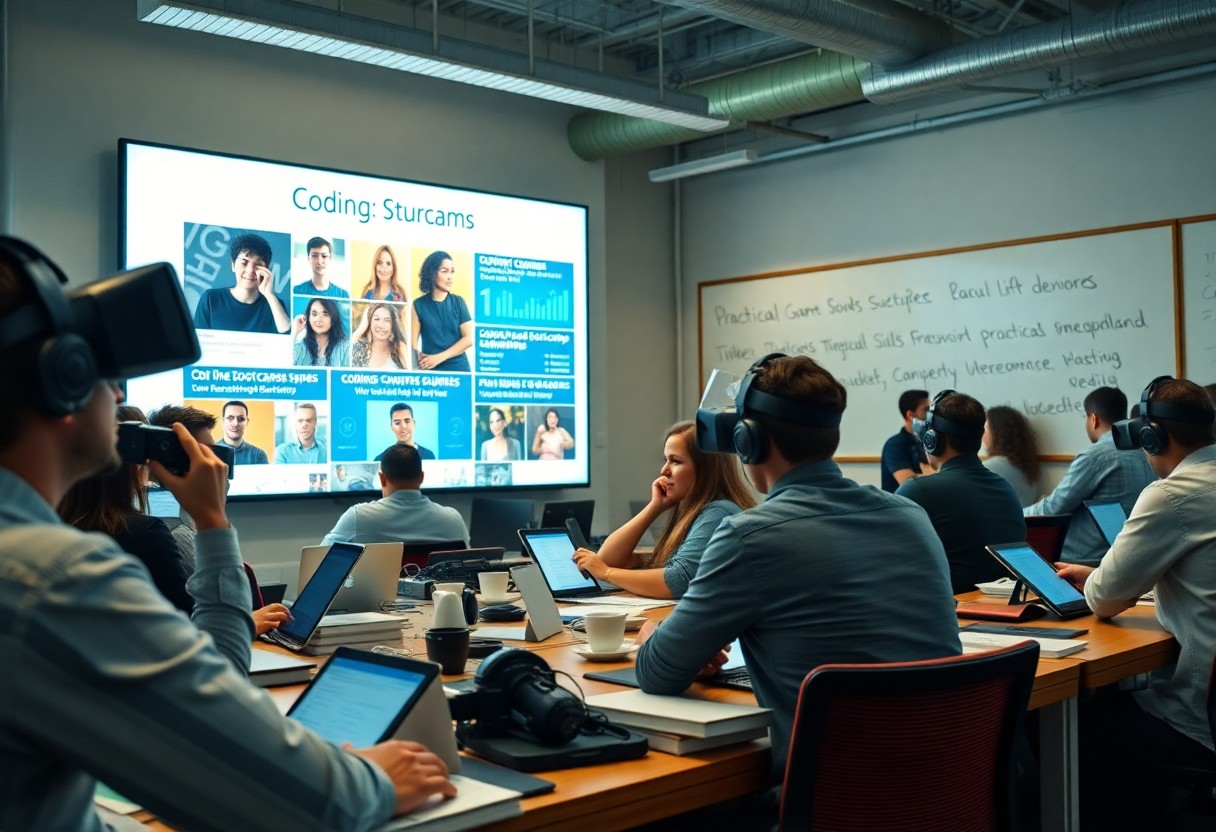
Technology has fundamentally altered how you acquire skills, making traditional educational pathways less relevant. Innovative tools and platforms are reshaping learning experiences, emphasizing practical knowledge over theoretical frameworks. As a founder, you can leverage these advancements to cultivate your expertise without the constraints of conventional degrees, focusing instead on your ability to adapt and innovate in a rapidly changing landscape.
Online Learning Platforms
Online learning platforms such as Coursera, Udacity, and Khan Academy offer tailored courses that prioritize practical skills over rote education. These resources enable you to learn at your own pace, choose relevant subjects, and gain knowledge directly applicable to your startup endeavors. The flexibility and accessibility allow you to bridge skill gaps swiftly, accelerating your readiness for entrepreneurial challenges.
Access to Resources and Networking
Access to resources and networking opportunities available online significantly enhances your potential for success. Platforms like LinkedIn, Meetup, and industry-specific forums facilitate connections with experienced professionals, mentors, and potential partners. You can engage in real-time discussions, attend virtual events, and tap into valuable insights that were once exclusively available within traditional educational settings. This openness creates a dynamic environment where learning and collaboration occur continuously, fostering innovation and growth.
Networking through these platforms can open doors to invaluable collaboration opportunities, mentorship, and funding. For instance, participating in online startup incubators or hackathons allows you to meet like-minded individuals who share your ambitions. Engaging in these communities not only nurtures your skills but also helps you forge relationships that can lead to partnerships, mentorships, or investors eager to support your vision. This peer-to-peer learning and mentorship ecosystem accelerates your development, often surpassing the opportunities offered by traditional educational institutions.

Successful Entrepreneurs Without Degrees
Countless successful entrepreneurs have forged paths in the business world without formal degrees. Gen Z grads are right: Degrees don’t matter to top innovators, as many industry leaders have demonstrated that skills, experience, and perseverance outweigh academic credentials. You can explore the insights shared by Fortune regarding this shift here.
Case Studies
Consider these notable entrepreneurs who achieved remarkable success without college degrees:
- Richard Branson – Founded the Virgin Group, generating over $24 billion in revenue.
- David Karp – Created Tumblr, which was sold to Yahoo for $1.1 billion.
- Evan Williams – Co-founded Twitter, valued at over $35 billion.
- Jack Dorsey – Built Square, with a market cap exceeding $39 billion.
- Elizabeth Holmes – Launched Theranos, which, despite controversies, reached a peak valuation of $9 billion.
Lessons Learned
These cases highlight the importance of creativity, problem-solving, and resilience over traditional educational pathways. You’ll find that many entrepreneurs prioritize real-world experience, networking, and continuous learning. This ability to adapt and innovate often proves to be more valuable in the fast-paced startup environment than holding a degree. The takeaway here is that determination and practical skills can drive success just as effectively as formal education.
The Rise of Alternative Education Paths
As you navigate the evolving landscape of startup success, alternative education methods emerge as viable routes to gaining imperative skills. From online courses to hands-on experiences, these paths offer flexibility and relevance that traditional degrees often lack. You’ll find an abundance of resources that cater specifically to the needs of aspiring entrepreneurs and skilled professionals, enabling you to tailor your learning journey to fit your personal and professional goals.
Bootcamps and Workshops
Bootcamps and workshops have surged in popularity, equipping you with practical skills in a condensed timeframe. For instance, coding bootcamps like Codecademy and General Assembly can transform your technical abilities within weeks, allowing you to tackle real-world projects immediately. These intensive programs focus on hands-on learning, ensuring you leave with a portfolio that demonstrates your competencies to potential employers or investors.
Mentorship and Apprenticeship Models
Mentorship and apprenticeship models provide you with invaluable on-the-job experience and guidance from seasoned professionals. By partnering with experienced entrepreneurs, you’ll gain insights into industry nuances, best practices, and networking opportunities that vastly enrich your understanding of the business landscape.
Entrepreneur-focused mentorship programs, such as Y Combinator’s Startup School, connect you with successful founders who share their journeys and pitfalls. Apprenticeships offer a unique opportunity to learn directly within a startup environment, where your hands-on contributions to projects help you build both competence and credibility. This practical experience frequently proves more applicable to startup demands than theoretical learning from traditional institutions, positioning you for greater success in your entrepreneurial endeavors.
The Impact of Employer Perceptions
As startup founders seek innovative talent, the perception of educational qualifications among employers is shifting. Many are beginning to prioritize real-world experience and problem-solving abilities over formal degrees. This trend is particularly prevalent in tech industries, where skills often weigh more heavily than traditional educational backgrounds. As a result, employers are increasingly open to diverse hiring practices that assess candidates based on their skills and creativity rather than their academic credentials.
Shifting Attitudes Towards Qualifications
Your qualifications are now evaluated more holistically, with a noticeable shift away from traditional metrics. Many employers recognize that practical skills, adaptability, and dedication can surpass what is learned in a classroom. Startups, in particular, value agility and innovation, leading to a more progressive view on hiring which embraces unconventional pathways.
Value of Portfolio Over Degree
The emphasis on tangible work over academic credentials is manifesting in the growing importance of portfolios. Demonstrating your skills through a portfolio offers concrete proof of your capabilities, allowing potential employers to see your work in action. This trend exemplifies how hands-on experience can significantly influence hiring decisions.
Portfolios increasingly serve as a powerful tool for showcasing your competencies, especially in creative and technical fields. For instance, a web developer may present live projects to illustrate proficiency in coding languages and design principles, bypassing the need for formal proof. This focus on demonstrable work allows you to effectively convey your value and skill set without relying solely on academic credentials, making your experience the deciding factor in landing startup opportunities.
Future Outlook: Degree Relevance in Entrepreneurship
The future of entrepreneurship increasingly favors skills and experience over formal degrees. As the startup ecosystem evolves, you can expect a landscape where adaptability and problem-solving abilities rise to the forefront, providing you with numerous opportunities to thrive without traditional credentials. It’s important to stay informed about emerging trends that can redefine your career path.
Trends to Watch
You should monitor the growing acceptance of micro-credentials and online certifications as legitimate qualifications in startup ventures. Many industry leaders now prioritize tangible skills acquired through hands-on experience or targeted learning programs. As a result, innovative educational institutions are tailoring their offerings to meet the immediate needs of the entrepreneurial world.
The Evolving Definition of Success
The definition of success in entrepreneurship has shifted significantly, focusing more on impact, innovation, and resilience than on conventional metrics. As you engage with this evolving landscape, you’ll notice that the most respected founders are those who prioritize disruption, customer satisfaction, and community impact over traditional benchmarks like revenue and valuation. Stories of entrepreneurs like Steve Jobs and Elon Musk illustrate that unconventional paths can yield influential and groundbreaking successes.
Conclusion
With this in mind, you should acknowledge that traditional college degrees may not guarantee startup success in today’s fast-paced, innovative landscape. Skills, practical experience, and adaptability often carry more weight than formal education. Emphasizing networking, mentorship, and continuous learning will empower you to navigate challenges effectively and capitalize on opportunities. As the entrepreneurial landscape evolves, prioritizing your unique abilities and passion over a degree can lead you to greater success in the startup world.
FAQ
Q: Why do some successful entrepreneurs skip college degrees?
A: Many entrepreneurs find that practical experience and skill development in real-world scenarios are more beneficial than formal education. The startup environment often requires hands-on problem-solving that can be gained through experience rather than traditional classroom settings.
Q: Are there notable examples of successful startups without college-educated founders?
A: Yes, companies like Apple, Facebook, and Microsoft were founded by individuals who did not complete their college education. These examples illustrate that innovation, creativity, and determination can outweigh formal educational qualifications.
Q: How does the skill gap impact the need for a college degree in startups?
A: Many startups prioritize skills and results over degrees. As technology evolves, the demand for specific technical skills often surpasses the value of a generalized college degree, making self-taught knowledge and experience more relevant in many industries.
Q: Why do investors focus less on educational backgrounds?
A: Investors tend to look for proven performance, a strong business model, and a capable team when evaluating startups. They recognize that passion, adaptability, and experience can often contribute more to a startup’s potential success than educational credentials.
Q: How has the rise of online learning platforms affected the relevance of college degrees?
A: Online learning platforms provide accessible education and skill acquisition tailored to industry needs. This flexibility allows aspiring entrepreneurs to gain relevant knowledge and expertise without the time and financial commitments of traditional degrees, further diminishing their importance.
Author


The Game
$27.43 (as of October 7, 2026 16:08 GMT +00:00 – More infoProduct prices and availability are accurate as of the date/time indicated and are subject to change. Any price and availability information displayed on [relevant Amazon Site(s), as applicable] at the time of purchase will apply to the purchase of this product.)
Thinking, Fast and Slow
$11.52 (as of October 7, 2026 16:07 GMT +00:00 – More infoProduct prices and availability are accurate as of the date/time indicated and are subject to change. Any price and availability information displayed on [relevant Amazon Site(s), as applicable] at the time of purchase will apply to the purchase of this product.)
Household Cybersecurity: A CPA’s Guide to Protecting Your Accounts and Personal Information (Financial Topics in 100 Pages or Less)
$19.99 (as of October 7, 2026 16:08 GMT +00:00 – More infoProduct prices and availability are accurate as of the date/time indicated and are subject to change. Any price and availability information displayed on [relevant Amazon Site(s), as applicable] at the time of purchase will apply to the purchase of this product.)
The Forever Paycheck: The New Retirement Strategy to Spend More, Worry Less, and Never Run Out of Money
$29.00 (as of October 7, 2026 16:07 GMT +00:00 – More infoProduct prices and availability are accurate as of the date/time indicated and are subject to change. Any price and availability information displayed on [relevant Amazon Site(s), as applicable] at the time of purchase will apply to the purchase of this product.)


Leave a Reply